 Posted by
 Tiger mosquitoes are widespread in Italy. The Asian tiger mosquito (Aedes albopictus) is now established throughout the country and is one of the mosquitoes tourists are most likely to notice during the warmer months.
Unlike many familiar mosquitoes, tiger mosquitoes are primarily active during the daytime. They can therefore become annoying while sightseeing, sitting outside a restaurant, relaxing in a garden or spending time around a holiday apartment – not only at night.
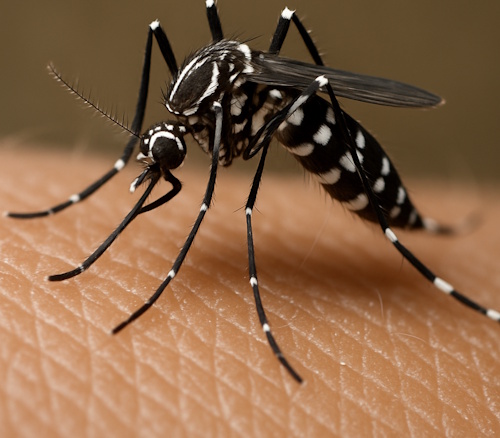
They are easy to recognize by their small dark body, distinctive white markings and white-banded legs. Their bites can be intensely itchy, but for most tourists the main problem is discomfort rather than serious illness.
However, tiger mosquitoes are medically important because they are capable of transmitting viruses including dengue and chikungunya. Italy therefore monitors mosquito populations and mosquito-borne diseases closely.
This guide answers the questions travelers most often have: Are tiger mosquitoes common in Italy? Where are they worst? Are there tiger mosquitoes in Rome, Tuscany, Lake Garda, Sicily and Sardinia? When is mosquito season? How dangerous are the bites and how can you protect yourself?
Our Tip: Book accommodations in Italy easily via Booking.com: real reviews, large selection, fair prices, and flexible cancellation.
Tiger Mosquitoes in Italy at a Glance
| Question | Answer |
|---|---|
| Are tiger mosquitoes in Italy? | Yes, they are established throughout the country |
| Scientific name | Aedes albopictus |
| Italian name | Zanzara tigre |
| Main season | Generally spring to autumn, with the greatest nuisance during warmer months |
| Do they bite during the day? | Yes |
| Are they found in Rome? | Yes |
| Are they found in Tuscany? | Yes |
| Are they found around Lake Garda? | Yes |
| Are they found in Sicily? | Yes |
| Are they found in Sardinia? | Yes |
| Can they transmit diseases? | Yes, including dengue and chikungunya under suitable conditions |
| Are most bites dangerous? | No |
| Emergency number in Italy | 112 |
What Is the Tiger Mosquito?
The Asian tiger mosquito is a relatively small mosquito originally native to parts of Asia. Over recent decades it has spread across large parts of the world.
Italy was one of the first European countries in which the species became firmly established. International transport helped move mosquito eggs between continents, particularly in products capable of holding small quantities of water.
The species adapted extremely well to European towns and cities because it does not require a large lake, pond or swamp to reproduce. A surprisingly small amount of standing water can provide a breeding site.
Typical breeding places can include:
- plant saucers;
- buckets;
- watering cans;
- blocked gutters;
- drains;
- containers left outdoors;
- discarded tires;
- small garden objects that collect rainwater.
This ability to live close to humans explains why tiger mosquitoes can be common not only in countryside and wetlands but also in densely populated Italian cities and holiday resorts.
Top Experiences in Italy
While you’re in Italy, don’t miss the most popular tours and attractions. Many sell out in advance, especially in high season.
How to Recognize a Tiger Mosquito
Tiger mosquitoes are usually smaller than many people expect. Their most recognizable feature is their distinctive black-and-white coloration.
Typical characteristics include:
- a dark or black body;
- white bands on the legs;
- a pale longitudinal stripe on the upper body;
- relatively small size;
- active, persistent biting behavior during daylight hours.
You do not need to identify every mosquito before protecting yourself. If mosquitoes are biting during the day in Italy, especially during warm weather, tiger mosquitoes are one possible explanation.
Are Tiger Mosquitoes Common in Italy?
Yes. Tiger mosquitoes are now established throughout Italy.
The European Centre for Disease Prevention and Control reported in its April 2026 distribution assessment that Aedes albopictus was established in all 107 Italian administrative units used in its European monitoring system.
This is important for travelers because older articles sometimes describe tiger mosquitoes as mainly a problem in northern Italy. That is no longer an accurate picture.
Northern Italy was particularly important during the early spread of the species, but today tiger mosquitoes can be encountered from the Alps and Po Valley to southern Italy, Sicily and Sardinia.
That does not mean mosquito numbers are equally high everywhere. Local abundance varies enormously according to:
- temperature;
- rainfall;
- water availability;
- urban environment;
- gardens and vegetation;
- mosquito-control measures;
- time of year.
Where Are Tiger Mosquitoes Worst in Italy?
There is no single Italian destination that can permanently be described as having the “worst” tiger mosquitoes.
Conditions can change from one neighborhood to another and from one year to the next.
A shaded garden containing numerous flower pots and water containers can have many mosquitoes while a windy hotel terrace only a few streets away has relatively few.
Generally, warm populated areas with vegetation and many small breeding sites can support substantial populations.
Northern and central Italy historically experienced particularly heavy infestations, but travelers should now regard tiger mosquitoes as a nationwide Italian summer issue rather than a northern-only problem.
Tiger Mosquitoes in Northern Italy
Northern Italy was among the earliest and most heavily colonized areas in Europe.
Regions such as Emilia-Romagna, Veneto, Lombardy and Piedmont have long-established tiger mosquito populations.
The warm summers of the Po Valley, large urban populations and enormous number of artificial water containers provide favorable conditions.
Tourists visiting Milan, Bologna, Verona and many towns across northern Italy can therefore encounter tiger mosquitoes during the warmer months.
Tiger Mosquitoes in Rome
Yes, there are tiger mosquitoes in Rome.
Rome provides many conditions that suit the species: warm summers, extensive residential neighborhoods, gardens, courtyards, parks and numerous small places where water can collect.
Tiger mosquitoes can therefore be encountered away from the historic center as well as in greener parts of the city.
A tourist walking around the Colosseum or Vatican during the middle of a hot sunny day may not necessarily experience serious mosquito problems. Conditions can be very different in a shaded hotel garden, park or restaurant terrace later in the afternoon.
Travelers staying in apartments with balconies or gardens should avoid leaving containers filled with standing water.
Tiger Mosquitoes in Florence and Tuscany
Tiger mosquitoes are widespread in Tuscany, including Florence and the surrounding countryside.
The combination of warm summers, vegetation, gardens and towns creates suitable conditions.
In central Florence, mosquito nuisance varies greatly depending on season and location. Areas close to vegetation and water can have more mosquitoes than exposed, heavily built-up streets.
In rural Tuscany, holiday homes with gardens and swimming pools may have mosquitoes around vegetation even when the pool itself is properly maintained.
Flowerpots, drains, buckets and small containers around the property are often more relevant breeding sites than a large treated swimming pool.
Tiger Mosquitoes around Lake Garda
Yes, tiger mosquitoes occur around Lake Garda.
The lake has a relatively mild climate, warm summers and abundant vegetation. Towns and campsites around the lake also provide numerous artificial containers in which mosquitoes can reproduce.
This does not mean every Lake Garda holiday involves heavy mosquito problems.
Wind can make a considerable difference. Exposed lakeside areas may sometimes have fewer mosquitoes than sheltered gardens or campsites only a short distance inland.
Visitors staying around Peschiera del Garda, Desenzano, Sirmione, Lazise, Bardolino, Garda, Malcesine and Riva del Garda should simply consider mosquito repellent a useful summer item.
Tiger Mosquitoes around Lake Como
Tiger mosquitoes are also present in Lombardy and can occur around Lake Como.
As with Lake Garda, local conditions matter. Sheltered gardens with vegetation can have significantly more mosquito activity than windy open areas directly beside the lake.
Visitors staying in Como, Bellagio, Menaggio or other lake destinations may therefore notice mosquitoes particularly during warm and humid periods.
Tiger Mosquitoes in Venice and Veneto
Veneto has long been one of the Italian regions where tiger mosquitoes are well established.
Venice itself has a unique lagoon environment, but tourists should remember that tiger mosquitoes do not require natural wetlands to breed. They are strongly adapted to urban environments.
Venice, Mestre and other towns across Veneto can therefore have tiger mosquitoes during summer.
The amount of nuisance can differ considerably according to wind, temperature, accommodation and exact location.
Tiger Mosquitoes in Milan
Milan has tiger mosquitoes.
The species has been established in Lombardy for many years and is well adapted to large urban areas.
Gardens, courtyards, parks, balconies and residential districts can provide suitable breeding opportunities.
Because tiger mosquitoes bite during daylight hours, visitors may encounter them while sitting outdoors rather than only when sleeping.
Tiger Mosquitoes in Bologna and Emilia-Romagna
Emilia-Romagna has played an important role in the European history of tiger mosquitoes and mosquito-borne disease.
In 2007, the region experienced Europe’s first large documented outbreak of locally transmitted chikungunya associated with tiger mosquitoes.
Tiger mosquitoes remain well established across the region.
This does not mean tourists in Bologna or on the Adriatic coast are likely to contract chikungunya. It does mean the mosquito species capable of transmitting the virus is present.
Tiger Mosquitoes in Rimini and on the Adriatic Coast
Tiger mosquitoes can occur in Rimini, Riccione and other Adriatic holiday resorts.
Visitors sometimes associate mosquitoes mainly with wetlands, but tiger mosquitoes are highly urbanized insects.
Hotels, campsites, gardens and residential neighborhoods can all provide breeding places if small amounts of standing water remain available.
Windy areas directly on the beach may have fewer mosquitoes than sheltered vegetation farther inland.
Tiger Mosquitoes in Naples and Campania
Tiger mosquitoes are established in Campania and can be encountered in Naples and surrounding tourist destinations.
Warm temperatures allow a long period of mosquito activity compared with cooler parts of Europe.
Visitors staying in gardens, villas and ground-floor accommodation may notice mosquitoes more than travelers spending their time mainly in densely built city streets.
Tiger Mosquitoes on the Amalfi Coast
Tiger mosquitoes can occur on the Amalfi Coast.
Vegetation, gardens and warm conditions provide suitable habitat in towns such as Positano, Amalfi, Praiano, Ravello and Maiori.
The steep and often breezy coastline can reduce mosquito nuisance in exposed places, while sheltered gardens can be very different.
There is no reason to avoid the Amalfi Coast because of mosquitoes. Carrying a suitable repellent during the warmer months is generally sufficient.
Tiger Mosquitoes in Puglia
Tiger mosquitoes are established in Puglia.
The long warm season means mosquitoes can remain noticeable well beyond the peak summer holiday period.
Visitors to Bari, Brindisi, Lecce, the Gargano and Salento can encounter tiger mosquitoes, particularly around vegetation and urban breeding sites.
Tiger Mosquitoes in Calabria
Tiger mosquitoes occur in Calabria as part of their nationwide Italian distribution.
The warm southern climate can support mosquito activity for a relatively long season.
Local numbers vary substantially according to water, vegetation, weather and mosquito-control programs.
Tiger Mosquitoes in Sicily
Yes, tiger mosquitoes are established in Sicily.
Visitors to Palermo, Catania, Syracuse, Taormina and other Sicilian destinations can encounter them during warm weather.
The long warm season means mosquito activity can continue later into autumn than in cooler parts of northern Europe.
However, hot and dry conditions alone do not necessarily produce huge mosquito numbers. Mosquitoes still require water in which their larvae can develop.
Urban gardens and artificially watered areas can therefore provide suitable conditions even during dry Mediterranean summers.
Tiger Mosquitoes in Sardinia
Tiger mosquitoes occur in Sardinia.
The island’s climate and populated coastal zones provide suitable conditions for the species.
As elsewhere in Italy, numbers can be very localized. A windy beach may have virtually no noticeable mosquito activity while a sheltered garden nearby has significantly more.
Repellent can therefore be useful during summer evenings and during the day in shaded or vegetated places.
Tiger Mosquitoes on Elba
Tiger mosquitoes can occur on Elba as well.
The island’s vegetation, settlements and warm climate create suitable habitat.
Visitors staying in holiday apartments or campsites may notice mosquitoes particularly around gardens and shaded vegetation.
When Is Tiger Mosquito Season in Italy?
The main period of tiger mosquito activity in Italy extends through the warmer part of the year.
There is no exact nationwide starting and ending date because climate differs enormously between the Alps and Sicily.
As a general travel guide:
| Month | Typical Situation |
|---|---|
| March | Generally limited, but activity may begin in particularly mild areas |
| April | Populations begin increasing in warmer regions |
| May | Mosquitoes become noticeable in many parts of Italy |
| June | High season begins in many regions |
| July | Often substantial activity |
| August | Often substantial activity |
| September | Still common in many regions |
| October | Can remain active, especially during warm weather |
| November | Much reduced, but mild southern locations can remain suitable longer |
| Winter | Adult mosquito activity is generally much lower |
These are general patterns rather than guarantees. A warm October can produce noticeably different conditions from a cold October.
Are There Tiger Mosquitoes in Italy in May?
Yes. Tiger mosquitoes can already be active in May, particularly in warmer areas.
Visitors should not assume that mosquito problems begin only during July and August.
Tiger Mosquitoes in Italy in June
By June, conditions are suitable for substantial tiger mosquito activity in many parts of Italy.
This is a sensible time to start carrying repellent, especially if you spend evenings and afternoons outdoors.
Tiger Mosquitoes in July and August
July and August fall within the main mosquito season.
Warm temperatures accelerate mosquito development, although drought and local control measures can influence numbers.
People staying in campsites, gardens and ground-floor apartments may notice significantly more mosquitoes than tourists in high-floor city hotels.
Tiger Mosquitoes in Italy in September
September is still mosquito season in much of Italy.
Warm weather frequently continues, particularly in central and southern regions.
Travelers should therefore not leave mosquito repellent at home simply because the peak summer holiday period has ended.
Are There Tiger Mosquitoes in Italy in October?
Yes, tiger mosquitoes can still be active in October, especially during warm autumn weather and in central or southern Italy.
Activity usually declines as temperatures fall, but there is no fixed date on which mosquitoes suddenly disappear.
Do Tiger Mosquitoes Bite During the Day?
Yes. This is one of the most important differences for travelers.
Tiger mosquitoes are primarily daytime biters.
They can be active from morning through late afternoon, with particularly noticeable activity during periods when temperatures are suitable and direct midday heat is less intense.
This is why travelers can get bitten:
- while eating breakfast outside;
- while sightseeing in parks;
- around a swimming pool;
- in a hotel garden;
- on a shaded restaurant terrace;
- while sitting outside a holiday apartment.
Mosquito protection in Italy therefore should not be considered only a nighttime issue.
Do Tiger Mosquitoes Bite at Night?
The species is primarily active during daylight hours, but mosquito activity does not operate according to a perfectly fixed clock.
Other mosquito species are also widespread in Italy and may bite during evening and nighttime hours.
A tourist being bitten at night should therefore not automatically assume the insects are tiger mosquitoes.
Why Are Tiger Mosquito Bites So Itchy?
When a female mosquito bites, substances in its saliva help it feed on blood. The human immune system reacts to these substances.
This reaction produces the familiar itching, redness and swelling.
Some people react very little to mosquito bites. Others develop relatively large red itchy areas.
The size of a skin reaction does not by itself indicate that a mosquito transmitted an infection.
What Does a Tiger Mosquito Bite Look Like?
A tiger mosquito bite usually looks similar to other mosquito bites.
Possible features include:
- a small raised bump;
- redness;
- itching;
- local swelling;
- several bites close together.
You normally cannot identify the mosquito species reliably from the appearance of the bite alone.
Are Tiger Mosquito Bites Dangerous in Italy?
For most tourists, a tiger mosquito bite causes nothing more than an itchy local skin reaction.
The medical importance of the mosquito lies in its ability to transmit certain viruses if the necessary chain of infection exists.
A mosquito cannot transmit dengue or chikungunya simply because it belongs to Aedes albopictus. It first needs to acquire the virus from an infected person and subsequently transmit it under suitable conditions.
This is why imported infections matter. A traveler can return to Italy infected abroad, be bitten by a local tiger mosquito and potentially create the conditions for local transmission.
Dengue in Italy
Tiger mosquitoes are capable of transmitting dengue.
Italy records imported dengue cases every year among people infected during travel abroad. Local transmission has also occurred in previous years when infected people and competent mosquito vectors were present at the same time.
As of the first half of 2026, Italy’s national surveillance system had recorded numerous dengue cases, but those reported during that period were associated with travel abroad rather than locally acquired transmission.
This situation can change during the mosquito season, which is why Italian and European authorities maintain surveillance.
For an ordinary tourist, dengue is still not comparable with the risk in many tropical regions. Nevertheless, mosquito-bite prevention remains sensible.
Chikungunya in Italy
Aedes albopictus can transmit chikungunya.
Italy has previously experienced locally transmitted outbreaks.
One important outbreak occurred in Emilia-Romagna in 2007, demonstrating that European tiger mosquito populations can sustain local transmission when the virus is introduced.
Further Italian transmission occurred in 2017, including cases associated with Lazio.
Italy therefore monitors chikungunya closely during mosquito season.
Zika Virus and Tiger Mosquitoes in Italy
The tiger mosquito is considered capable of participating in Zika transmission, although it is generally a less important vector globally than Aedes aegypti.
Italy monitors Zika infections as part of its national arbovirus surveillance.
For an ordinary Italian holiday, Zika is not currently one of the main mosquito risks travelers are likely to encounter.
What About West Nile Virus?
This subject needs an important distinction.
West Nile virus is present in Italy and can cause locally acquired infections, particularly during summer. However, the main mosquito vector involved in the European transmission cycle is generally Culex, particularly the Culex pipiens complex.
Therefore, an article specifically about the tiger mosquito should not present West Nile as though every Italian West Nile infection is being spread by Aedes albopictus.
For tourists, the broader conclusion remains useful: mosquito protection can reduce exposure to several mosquito species, not only tiger mosquitoes.
How High Is the Disease Risk for Tourists?
For most travelers, mosquito bites in Italy are primarily a nuisance rather than a medical emergency.
The existence of locally competent mosquito vectors means outbreaks of diseases such as dengue or chikungunya are possible, but that does not mean every Italian mosquito season involves widespread transmission.
Risk changes over time and should be evaluated using current health information, particularly if an active outbreak has been announced in the destination you are visiting.
Travelers who are pregnant, immunocompromised or have particular medical concerns may wish to seek individualized medical advice before travel.
Our Tip: Book accommodations in Italy easily via Booking.com: real reviews, large selection, fair prices, and flexible cancellation.
How to Protect Yourself from Tiger Mosquitoes in Italy
Preventing bites is much easier than trying to eliminate every mosquito around an accommodation.
Use mosquito repellent
Apply an effective insect repellent to exposed skin according to the product instructions.
Because tiger mosquitoes bite during daylight hours, repellent may be useful during the day as well as in the evening.
Cover exposed skin when mosquitoes are numerous
Long lightweight trousers and long sleeves reduce the amount of skin available to mosquitoes.
This can be particularly useful around gardens and vegetation.
Use window screens
Mosquito screens can make a significant difference in Italian accommodation.
If windows lack screens, air conditioning may allow you to keep them closed during periods of high mosquito activity.
Remove standing water
If you are staying for an extended period in a holiday home, check balconies and gardens for small containers holding water.
Tiger mosquitoes can reproduce in surprisingly small quantities of water.
Use mosquito nets where necessary
A bed net can be useful in accommodation where mosquitoes are entering the room and other barriers are inadequate.
Tiger Mosquitoes in Hotels and Holiday Apartments
The number of mosquitoes at an accommodation depends strongly on the immediate surroundings.
A hotel in a dry, exposed city street may have few mosquitoes. A nearby apartment with a lush shaded garden may have many more.
Useful features include:
- window and door screens;
- air conditioning;
- well-maintained gardens;
- absence of standing water;
- fans on terraces;
- rooms above ground level.
A mosquito problem does not necessarily indicate poor hygiene. Tiger mosquitoes can occur even around well-maintained properties because breeding sites may exist in neighboring gardens or public areas.
Do Swimming Pools Cause Tiger Mosquitoes?
A properly maintained swimming pool is generally not the classic breeding site people imagine.
Smaller stagnant water containers are often more important.
The problem around a pool can therefore be:
- plant saucers;
- unused children’s toys;
- covers holding rainwater;
- blocked drains;
- buckets;
- decorative containers.
Swimming pools are often surrounded by gardens, which can make the area attractive to adult mosquitoes even if the pool water itself is properly treated.
Do Tiger Mosquitoes Fly High?
Tiger mosquitoes generally remain relatively close to ground level and vegetation, although they can obviously reach balconies and upper floors.
Travelers on higher floors sometimes experience fewer mosquitoes than people staying at ground level beside gardens, but this is not a guarantee.
Can Tiger Mosquitoes Enter Hotel Rooms?
Yes. They can enter through open doors and windows.
Screens and air conditioning can greatly reduce this problem.
If mosquitoes are already inside a room, a fan can also make it harder for them to fly and land effectively.
Do Fans Help Against Tiger Mosquitoes?
Fans can help because mosquitoes are relatively weak fliers.
Moving air can make it more difficult for them to approach exposed skin and can also disperse some of the chemical cues they use to locate people.
A fan is therefore a useful addition on a terrace or inside a room, although it should not necessarily replace repellent in areas with large mosquito populations.
What to Do After a Tiger Mosquito Bite
Most bites require only simple care.
- Wash the area if necessary.
- Avoid scratching as much as possible.
- A cool compress can help reduce itching and swelling.
- Over-the-counter treatments for insect bites may help some people.
Scratching can damage the skin and increase the possibility of a secondary bacterial infection.
When Should You Seek Medical Help?
A normal itchy mosquito bite usually does not require a doctor.
Seek medical advice if you develop:
- difficulty breathing;
- major swelling affecting more than the immediate bite area;
- fainting or another severe allergic reaction;
- high fever;
- severe headache;
- significant muscle or joint pain;
- a widespread rash;
- symptoms of illness after being in an area with an announced mosquito-borne disease outbreak.
In an acute medical emergency in Italy, call 112.
Tiger Mosquito vs. Normal Mosquito
| Feature | Tiger Mosquito | Many Common Culex Mosquitoes |
|---|---|---|
| Appearance | Black with striking white markings | Usually more uniformly brownish |
| Main biting period | Mostly daytime | Often evening and nighttime |
| Urban breeding | Very common | Also possible |
| Dengue/chikungunya vector | Yes | Not the principal vector |
| West Nile importance in Europe | Not the main vector | Culex mosquitoes are particularly important |
Why Does Italy Have So Many Tiger Mosquitoes?
Several factors help explain their success.
Italy has a generally favorable climate, especially during spring, summer and early autumn. The country also contains densely populated urban areas with countless small artificial containers suitable for mosquito breeding.
Its relatively mild winters in many regions allow tiger mosquito eggs to survive conditions that would be difficult for many tropical mosquito populations.
Climate change and increasingly warm conditions can also lengthen the period during which mosquitoes can develop and diseases can potentially be transmitted.
Are Tiger Mosquitoes Getting Worse in Italy?
Tiger mosquitoes have already completed an extraordinary geographical expansion in Italy and across Europe.
For Italy itself, the species is no longer simply “spreading into a few new northern areas.” It is already established nationwide according to current European monitoring.
The more important future questions involve population density, length of the mosquito season and the risk of local transmission of mosquito-borne viruses.
These can change with weather, climate, international travel and mosquito-control efforts.
Top Experiences in Italy
While you’re in Italy, don’t miss the most popular tours and attractions. Many sell out in advance, especially in high season.
Frequently Asked Questions About Tiger Mosquitoes in Italy
Are there tiger mosquitoes in Italy?
Yes. The Asian tiger mosquito is established throughout Italy.
What are tiger mosquitoes called in Italian?
The Italian term is zanzara tigre.
Are tiger mosquitoes common in Rome?
Yes. They are well established in Rome and can be particularly noticeable in gardens, parks and shaded residential areas during warm weather.
Are there tiger mosquitoes in Tuscany?
Yes. They occur in Florence and throughout suitable parts of Tuscany.
Are there tiger mosquitoes at Lake Garda?
Yes. Tiger mosquitoes are present around Lake Garda. Local numbers vary according to weather, wind, vegetation and breeding sites.
Are there tiger mosquitoes at Lake Como?
Yes. They occur in Lombardy and can be encountered around Lake Como.
Are there tiger mosquitoes in Venice?
Yes. Tiger mosquitoes are established in Veneto, including urban areas. Their abundance varies locally.
Are there tiger mosquitoes in Milan?
Yes. They are well established in Lombardy and occur in Milan.
Are there tiger mosquitoes in Rimini?
Yes. Tiger mosquitoes can occur in Rimini and other resorts along the Emilia-Romagna coast.
Are there tiger mosquitoes in Sicily?
Yes. They are established in Sicily and can remain active for a long season because of the warm climate.
Are there tiger mosquitoes in Sardinia?
Yes. Tiger mosquitoes are established in Sardinia.
Are there tiger mosquitoes on the Amalfi Coast?
Yes. They can occur around Amalfi Coast towns, particularly in sheltered areas with vegetation and breeding sites.
Are tiger mosquitoes active during the day?
Yes. Daytime biting is one of the species’ most characteristic behaviors.
What month are mosquitoes worst in Italy?
There is no single nationwide worst month, but mosquito activity is generally substantial during the warm summer period, particularly from June through September.
Are there mosquitoes in Italy in May?
Yes. Tiger mosquitoes can already be active during May, particularly in warmer areas.
Are there mosquitoes in Italy in September?
Yes. September is still within the mosquito season across much of Italy.
Are there mosquitoes in Italy in October?
Yes, especially when autumn weather remains warm. Activity generally declines as temperatures fall.
Can tiger mosquitoes transmit dengue in Italy?
Yes. Aedes albopictus is capable of transmitting dengue, and locally acquired dengue transmission has occurred in Italy in previous years.
Can tiger mosquitoes transmit chikungunya in Italy?
Yes. Italy has experienced locally transmitted chikungunya outbreaks associated with Aedes albopictus.
Do tiger mosquitoes cause West Nile in Italy?
West Nile virus circulates in Italy, but the principal European mosquito vectors are generally Culex mosquitoes rather than the Asian tiger mosquito.
Are tiger mosquitoes dangerous to tourists?
For most tourists they mainly cause itchy bites. Their ability to transmit dengue and chikungunya makes bite prevention sensible, particularly if health authorities report active local transmission.
What is the best protection against tiger mosquitoes?
Use an effective mosquito repellent, cover exposed skin when mosquitoes are numerous, use screens or air conditioning and prevent standing water from accumulating around accommodation.
Conclusion: Tiger Mosquitoes Are Common in Italy but Usually a Nuisance
Tiger mosquitoes are now part of everyday summer life across Italy. They are not confined to one region: current European surveillance considers the species established throughout the country.
Travelers can encounter them in Rome, Florence, Tuscany, Milan, Venice, Bologna, Lake Garda, Lake Como, Rimini, Naples, the Amalfi Coast, Puglia, Calabria, Sicily, Sardinia and many other Italian destinations.
The biggest difference compared with many familiar European mosquitoes is their behavior. Tiger mosquitoes bite primarily during daylight hours, so protection can be useful while sightseeing, relaxing beside a pool or sitting in a garden – not just when going to bed.
For most travelers, bites result only in itching, redness and temporary swelling. The reason health authorities take the species seriously is its ability to transmit viruses such as dengue and chikungunya when the required chain of infection exists.
There is no reason to avoid Italy because of tiger mosquitoes. Carrying repellent, using window screens where available, covering exposed skin when mosquitoes are numerous and avoiding standing water around holiday accommodation provide practical protection.
For tourists, the best approach is therefore simple: expect mosquitoes during the warmer months, protect yourself against bites, but do not treat every tiger mosquito as a serious health threat.
| Animals & Nature in Italy | |
|---|---|
| Snakes in Italy | Sharks in Italy |
| Tiger Mosquito in Italy | Bears in Italy |
| Weever Fish in Italy | Jellyfish in Italy |
| Ticks in Italy | |