 Posted by
 Yes, there are sharks in Italy. Sharks live in all the seas surrounding the country, including the Adriatic Sea, Tyrrhenian Sea, Ionian Sea and the waters around Sicily and Sardinia.
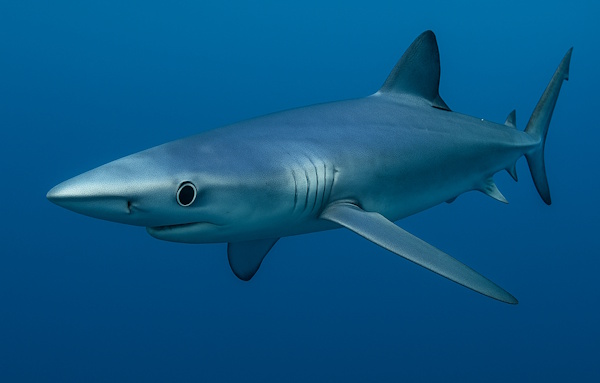
Some of the species recorded in Italian and Mediterranean waters are large sharks, including the Great White Shark, Blue Shark, Shortfin Mako, Thresher Shark and Basking Shark. However, this sounds considerably more alarming than the actual situation for tourists.
Shark attacks in Italy are extremely rare. Millions of people swim in Italian waters every summer, while encounters between ordinary beachgoers and potentially dangerous sharks are exceptional.
Most sharks live offshore, in deeper water or are naturally uncommon. Several of the Mediterranean’s larger shark species have also declined dramatically and are now threatened.
This guide answers the questions most relevant to travelers: Are there Great White Sharks in Italy? Where are sharks most common? Are there sharks in Sicily, Sardinia, the Adriatic and around popular holiday resorts? And how dangerous is swimming in Italy?
Our Tip:Book accommodation in Italy easily via Booking.com: real reviews, wide selection, fair prices and flexible cancellation.
Sharks in Italy at a Glance
| Question | Answer |
|---|---|
| Are there sharks in Italy? | Yes |
| Are there Great White Sharks? | Yes, but they are extremely rare |
| Are there sharks in the Adriatic? | Yes |
| Are there sharks around Sicily? | Yes |
| Are there sharks around Sardinia? | Yes |
| Are there sharks near Italian beaches? | Possible, but large dangerous species are rarely encountered by swimmers |
| Are shark attacks common? | No, they are extremely rare |
| Can you swim safely in Italy? | Yes. Sharks are not a significant risk for ordinary swimmers |
| Most relevant large shark | Blue Shark; Great Whites occur but are much rarer |
| Emergency number | 112 |
How Many Shark Species Live Around Italy?
The Mediterranean has a surprisingly diverse shark fauna. Scientific identification guides have documented dozens of shark species in the Mediterranean and Black Sea region.
The exact number given for the Mediterranean varies according to taxonomy, geographical definitions and whether extremely rare or uncertain historical records are included. A widely used FAO identification guide treats 49 shark species, although the presence of several listed species required confirmation at the time of publication.
For tourists, however, the exact number is less important than the types of sharks they might realistically encounter.
Many Mediterranean sharks are relatively small bottom-dwelling species. Others live primarily in deep or offshore waters. Only a small number are large sharks that people commonly associate with potential danger.
Top Experiences in Italy
While you’re in Italy, don’t miss the most popular tours and attractions. Many sell out in advance, especially in high season.
Are There Dangerous Sharks in Italy?
Potentially dangerous shark species do occur in Italian waters. This includes the Great White Shark and Shortfin Mako, as well as other large predatory sharks.
But the presence of a species does not mean it represents a significant danger to tourists.
Great White Sharks are extremely rare in today’s Mediterranean. Blue Sharks are considerably more widespread but normally inhabit offshore waters. Many other sharks spend most of their time at depths where beachgoers will never encounter them.
The practical risk to someone swimming from an Italian beach is therefore extremely low.
Great White Sharks in Italy
Yes, Great White Sharks live in the Mediterranean and have been recorded in Italian waters.
The Great White Shark (Carcharodon carcharias) has a long history in the Mediterranean. Historical records exist from several parts of the region, including waters around Italy.
Today, however, Mediterranean Great Whites appear to be extremely scarce. Researchers describe the Mediterranean population as one of the world’s most endangered populations of the species.
This makes seeing a Great White in Italy an exceptionally unusual event rather than something swimmers should expect.
Great White Sharks around Sicily
The waters around Sicily and the Sicilian Channel are particularly interesting to shark researchers.
Between 2021 and 2023, an international research team conducted expeditions searching for Mediterranean Great White Sharks. The researchers did not visually encounter a Great White despite hundreds of hours of survey work.
However, environmental DNA samples confirmed Great White Shark presence at several locations in the Sicilian Channel. Positive samples came from areas around the Pantelleria Banks, Lampedusa and the Egadi Islands.
The research indicates that the Sicilian Channel remains an important area for the Mediterranean Great White Shark population.
For tourists, the same research also illustrates just how difficult these animals are to find. Scientists specifically searching for them did not see a live Great White during the three pilot expeditions.
Can Great White Sharks Come Close to Italian Beaches?
Great Whites are capable of entering coastal waters, so it would be incorrect to say that they can never approach an Italian coast.
But there is an enormous difference between something being biologically possible and being a realistic risk for a tourist.
A swimmer at a busy Italian beach is extraordinarily unlikely to encounter a Great White Shark. The Mediterranean population is very small, and modern confirmed observations are rare.
Blue Sharks in Italy
The Blue Shark (Prionace glauca) is one of the better-known large sharks of the Mediterranean.
Blue Sharks are pelagic animals, meaning they primarily inhabit open water rather than spending their lives close to beaches. They can nevertheless occasionally occur closer to land.
They are recognizable by their slender body, long pectoral fins and characteristic blue coloration.
Blue Sharks can grow to several meters in length, but encounters with ordinary swimmers are unusual because their preferred habitat is generally offshore.
They are more relevant to fishermen, sailors and divers in open water than to tourists swimming close to shore.
Shortfin Mako Sharks in Italy
The Shortfin Mako (Isurus oxyrinchus) occurs in the Mediterranean, including waters associated with Italy.
It is a large, powerful open-ocean shark and one of the fastest sharks in the world.
Makos are potentially dangerous because of their size and predatory nature, but they are not a normal feature of Italian bathing beaches. The Mediterranean population has suffered heavily from fishing pressure and is of serious conservation concern.
For the average tourist, encountering a Mako while swimming from shore is extraordinarily unlikely.
Thresher Sharks in Italy
The Common Thresher Shark (Alopias vulpinus) occurs in the Mediterranean.
It is immediately recognizable by the extremely long upper lobe of its tail, which can account for roughly half of the animal’s total length.
Thresher Sharks use their tails while hunting schooling fish. Despite their impressive size, they are not considered an important danger to beachgoers.
Like many large Mediterranean sharks, they are mainly an offshore species.
Basking Sharks in Italy
One of the largest sharks that can occur around Italy is also one of the least threatening.
The Basking Shark (Cetorhinus maximus) is the world’s second-largest fish after the Whale Shark and can reach several meters in length.
Despite its enormous size, it feeds by filtering tiny organisms from the water. It does not hunt humans or other large animals.
A Basking Shark can therefore look spectacular or frightening when seen from a boat, but it is not a predatory threat to swimmers.
Porbeagle Sharks in Italy
The Porbeagle (Lamna nasus) is related to the Great White and Mako and occurs in the Mediterranean.
It is a powerful predatory shark that feeds primarily on fish. Mediterranean Porbeagles have declined severely and are now very rare.
They live mainly offshore and are not a meaningful risk to tourists at Italian beaches.
Hammerhead Sharks in Italy
Hammerhead sharks have historically been recorded in the Mediterranean, including species such as the Smooth Hammerhead.
These sharks are now rare in the region. A tourist should not expect to encounter a hammerhead while swimming or snorkeling along the Italian coast.
Small Sharks in Italy
Not every shark in Italy is a huge open-ocean predator. In fact, many of the sharks found in Italian waters are much smaller.
Catsharks, smoothhounds, dogfish and other relatively small species occur in the Mediterranean. Some live close to the seabed and are encountered much more often by fishermen than by swimmers.
These smaller sharks receive much less attention because they do not fit the popular image of a shark, but they form an important part of Mediterranean marine ecosystems.
Are There Sharks in the Adriatic Sea?
Yes. Sharks live in the Adriatic Sea.
The Adriatic borders some of Italy’s most popular holiday regions, including Emilia-Romagna, Veneto, Marche, Abruzzo and Puglia.
Several shark species occur in the Adriatic, including Blue Sharks and smaller bottom-associated species. Large sharks have also been recorded historically.
This does not mean that tourists swimming in Rimini, Riccione, Jesolo or other Adriatic resorts regularly encounter sharks. They do not.
The shallow northern Adriatic, in particular, contains enormous numbers of swimmers during summer. Shark encounters involving beachgoers remain exceptional.
Sharks in Rimini
Sharks occur in the wider Adriatic ecosystem, but sharks are not a normal danger for swimmers in Rimini.
Rimini’s long, shallow and heavily used beaches are among Italy’s busiest bathing areas. Ordinary tourists should be much more concerned about standard swimming safety, heat and sun exposure than sharks.
Sharks around Venice
Various sharks occur in the Adriatic Sea, but tourists visiting Venice or swimming at nearby Adriatic beaches should not expect to encounter large sharks.
The Venice Lagoon itself is a very different environment from the deeper open Adriatic and is not a typical habitat for large pelagic sharks.
Are There Sharks around Sicily?
Yes. Sicily is surrounded by waters containing several shark species.
The Strait of Sicily and Sicilian Channel are particularly important because they connect different parts of the Mediterranean and contain deep-water and open-sea habitats.
Species recorded in the wider area include Blue Sharks, Great Whites, Thresher Sharks and various smaller sharks.
The recent environmental-DNA evidence for Great White Sharks in the Sicilian Channel makes Sicily particularly interesting scientifically.
Nevertheless, tourists swimming at ordinary Sicilian beaches have an extremely low risk of encountering a dangerous shark.
Sharks around Lampedusa
Lampedusa lies in the middle of the Sicilian Channel and is surrounded by deep, biologically rich Mediterranean waters.
Great White Shark environmental DNA was detected around Lampedusa during recent scientific expeditions. Researchers have also gathered historical information from fishermen in the area.
This does not mean that Great Whites regularly swim among tourists at beaches such as Spiaggia dei Conigli.
The scientific detections relate to the wider marine environment surrounding the island. Beachgoers continue to face an extremely low shark risk.
Are There Sharks around Sardinia?
Yes. Sharks occur in the waters surrounding Sardinia.
The island is surrounded by large areas of relatively deep Mediterranean water, and various shark species can occur offshore.
Blue Sharks are among the larger species associated with Mediterranean open waters. Other sharks, including Basking Sharks and smaller species, can also occur in the wider region.
Despite Sardinia’s thousands of kilometers of coastline and enormous popularity as a beach destination, shark attacks are extraordinarily unusual.
There is no general reason to avoid swimming or snorkeling in Sardinia because of sharks.
Are There Sharks around the Amalfi Coast?
Sharks live in the Tyrrhenian Sea, which includes the waters off the Amalfi Coast.
However, large dangerous sharks are not a normal sight at beaches around Amalfi, Positano, Praiano or Maiori.
The steep coastline means deep water can sometimes be relatively close to land, but that does not translate into a significant shark risk for tourists.
Boat traffic, swimming conditions and local weather are considerably more relevant safety considerations.
Are There Sharks near Naples?
Sharks occur in the wider Tyrrhenian Sea and therefore also in the marine ecosystem around the Gulf of Naples.
However, tourists swimming around Naples, Ischia, Capri or Sorrento should not expect encounters with large predatory sharks.
Most larger Mediterranean shark species are rare or predominantly offshore.
Are There Sharks around Capri and Ischia?
Yes, sharks can occur in the wider waters around Capri and Ischia, as they can throughout the Tyrrhenian Sea.
This is not the same as saying that sharks commonly approach tourist beaches. Large sharks are rarely seen by ordinary swimmers.
For snorkeling and swimming holidays on Capri or Ischia, sharks are not a significant practical danger.
Are There Sharks near Rome?
The Mediterranean off the Lazio coast contains sharks, so sharks technically occur in the sea near Rome.
Popular beaches at Ostia and elsewhere along the Lazio coast are not known as places where swimmers routinely encounter dangerous sharks.
As elsewhere in Italy, larger pelagic sharks generally spend their time farther offshore.
Are There Sharks in Tuscany?
Yes. Sharks live in the Tyrrhenian and Ligurian seas off Tuscany.
The Tuscan Archipelago, including Elba, lies within a rich marine environment. Larger sharks can occur in offshore waters, while smaller species are also part of the ecosystem.
This does not make beaches on Elba or the Tuscan mainland dangerous for swimmers.
Are There Sharks around Elba?
Sharks occur in the wider waters around Elba, but sightings by beachgoers are uncommon.
Elba is surrounded by the protected waters of the Tuscan Archipelago and offers excellent snorkeling and diving. The marine life tourists are likely to encounter consists primarily of fish and other much smaller Mediterranean animals.
Large predatory sharks are not a normal feature of swimming from Elba’s beaches.
Are There Sharks in Puglia?
Puglia is bordered by both the Adriatic and Ionian seas, and shark species occur in both.
However, the popular beaches around the Gargano Peninsula, Bari, Brindisi, Lecce and Salento do not have a significant shark-attack problem.
Large sharks can occur offshore, while smaller shark species form part of the normal marine fauna.
Are There Sharks in Calabria?
Yes. Calabria is surrounded by the Tyrrhenian and Ionian seas, both of which contain sharks.
The Strait of Messina between Calabria and Sicily is a biologically interesting marine area with deep water and strong currents.
Nevertheless, tourists swimming along the Calabrian coast have very little reason to worry about shark attacks.
Do Sharks Come Close to Beaches in Italy?
They can, but large sharks close to crowded Italian beaches are unusual.
Some smaller species naturally inhabit relatively shallow coastal environments. Larger pelagic sharks generally spend much more time offshore.
Occasional sightings close to shore attract considerable media attention precisely because they are unusual.
A shark seen near an Italian beach is also not automatically a dangerous species. Identification from photographs and videos can be difficult, and harmless marine animals are sometimes incorrectly reported as dangerous sharks.
Can You See Sharks While Snorkeling in Italy?
It is possible but unlikely at most tourist snorkeling locations.
Most people snorkeling from Italian beaches will see small Mediterranean fish, sea urchins, crabs and other coastal marine life rather than sharks.
Small harmless sharks may occasionally be encountered by divers, particularly in areas with suitable seabed habitat.
Seeing a large shark while casually snorkeling from a beach would be highly unusual.
Shark Attacks in Italy
Shark attacks have occurred in Italian waters, but they are extremely rare.
Historical records stretch back over a long period and include incidents involving fishermen, divers and people in the sea. Some historical incidents have been attributed to Great White Sharks.
However, historical shark-attack databases have limitations. Older reports may lack reliable species identification or detailed documentation, so it is misleading to treat every historical report as equally certain.
The most important point for modern travelers is that Italy does not experience anything resembling the frequency of shark incidents associated with some well-known shark hotspots elsewhere in the world.
Considering the enormous number of people swimming along thousands of kilometers of Italian coastline every year, attacks remain exceptional.
When Was the Last Shark Attack in Italy?
This question sounds simple but is difficult to answer precisely because databases distinguish between unprovoked bites, provoked incidents, interactions with fishermen and incidents whose details cannot be verified.
Online lists also frequently repeat old newspaper stories without establishing whether the species identification or circumstances were confirmed.
For tourists, a more useful fact is that modern serious attacks on ordinary swimmers at Italian resort beaches are exceptionally uncommon.
How High Is the Shark Attack Risk in Italy?
There is no scientifically useful way to calculate an individual’s precise probability of being attacked by a shark during an Italian holiday.
Figures such as “one chance in several billion swims” may sound impressive but depend on uncertain estimates of swimmer numbers, exposure time and how incidents are classified.
What the available evidence does establish is much simpler: the risk is extremely low.
Italy receives huge numbers of beach tourists every year, and shark attacks remain exceptional events.
Is the Adriatic or Mediterranean More Dangerous for Sharks?
The Adriatic is itself part of the Mediterranean Sea, so the comparison is somewhat misleading.
Shark distribution varies by species, depth, temperature, food availability and season. Some species use offshore Adriatic waters, while others are associated with the Tyrrhenian Sea, Sicilian Channel or other Mediterranean regions.
For ordinary swimmers, there is no reason to choose an Italian beach based on fear of sharks.
What Should You Do If You See a Shark?
A shark sighting close to shore is unusual, but normal wildlife precautions make sense.
- Stay calm. Avoid frantic splashing.
- Leave the water calmly if a large shark is nearby.
- Keep the animal in sight while moving toward shore or a boat if possible.
- Do not approach or chase it for photographs or video.
- Follow lifeguard instructions. If a beach is temporarily closed, remain out of the water until authorities reopen it.
There is no need to panic simply because a shark has been reported somewhere along a large stretch of Italian coastline.
How to Reduce an Already Very Small Risk
No special shark precautions are normally necessary for an Italian beach holiday. People who want to be particularly cautious can follow some general principles:
- Swim at supervised beaches where possible.
- Avoid swimming far offshore alone.
- Pay attention to lifeguard warnings and beach flags.
- Do not swim around active fishing operations or where fish are being cleaned.
- Avoid approaching any large wild marine animal.
These precautions are useful for general water safety as well as the already tiny shark risk.
What Is More Dangerous Than Sharks at Italian Beaches?
For tourists, ordinary water hazards deserve far more attention than sharks.
Currents
Currents can carry swimmers away from shore, particularly around exposed beaches, channels and rocky coastlines.
Waves and rough seas
Even experienced swimmers can get into difficulty when waves and wind increase. Beach flags and lifeguard warnings should always be taken seriously.
Boats and jet skis
Italy has enormous numbers of recreational boats during summer. Swimming outside designated areas can increase the risk of collisions.
Rocks
Rocky Italian coastlines can become slippery, and waves can push swimmers against rocks.
Heat and sun
Dehydration, sunburn and heat exhaustion are much more common holiday problems than encounters with sharks.
For most travelers, these everyday risks deserve substantially more attention than large marine predators.
Why Are Sharks Important in Italy?
Sharks are predators and play important roles in marine ecosystems. Unfortunately, many Mediterranean shark populations have declined dramatically.
Sharks generally grow slowly, mature relatively late and produce fewer young than many bony fish. This makes populations particularly vulnerable to intensive fishing and accidental capture.
Several of the impressive sharks people fear most are therefore themselves in much greater danger from humans than humans are from them.
The Mediterranean Great White population is a particularly striking example. Modern research indicates that it persists in the region, but at extremely low abundance.
Our Tip:Book accommodation in Italy easily via Booking.com: real reviews, wide selection, fair prices and flexible cancellation.
Frequently Asked Questions About Sharks in Italy
Are there sharks in Italy?
Yes. Many shark species occur in the seas surrounding Italy, ranging from small bottom-dwelling sharks to large species such as Blue Sharks, Basking Sharks and the extremely rare Great White Shark.
Are there Great White Sharks in Italy?
Yes. Great White Sharks occur in the Mediterranean and have been documented in Italian waters. Recent environmental-DNA research confirmed their presence in the Sicilian Channel. However, they are extremely rare.
Where are Great White Sharks found in Italy?
Historical records exist from various Italian waters. Recent research has focused particularly on the Sicilian Channel, with environmental-DNA detections near Pantelleria, Lampedusa and the Egadi Islands.
Are there sharks in Sicily?
Yes. Several shark species occur around Sicily. The Sicilian Channel is also an important research area for the critically depleted Mediterranean Great White Shark population.
Are there sharks in Sardinia?
Yes. Sharks occur in the waters around Sardinia, particularly offshore. Dangerous encounters with swimmers are extremely rare.
Are there sharks in the Adriatic Sea?
Yes. The Adriatic contains several shark species, including Blue Sharks and smaller sharks. Large sharks are rarely encountered by swimmers at Italian Adriatic resorts.
Are there sharks in Rimini?
Sharks live in the wider Adriatic Sea, but they are not a normal danger for tourists swimming from Rimini’s beaches.
Are there sharks on the Amalfi Coast?
Sharks occur in the wider Tyrrhenian Sea, but large predatory sharks are very rarely encountered by swimmers along the Amalfi Coast.
Are there sharks around Capri?
Sharks can occur in the wider waters around Capri, but encounters with large sharks at tourist beaches are highly unusual.
Are there sharks around Elba?
Yes. Sharks are part of the marine ecosystem around the Tuscan Archipelago, but large dangerous sharks are not normally encountered by swimmers at Elba’s beaches.
Are there sharks near Rome?
Sharks occur in the Mediterranean off Lazio, but they are not a significant danger at beaches around Rome such as Ostia.
Are shark attacks common in Italy?
No. Shark attacks in Italy are extremely rare, particularly considering the huge number of people who swim in Italian waters every year.
Is it safe to swim in the sea in Italy?
Yes. Sharks are not a significant risk for ordinary swimmers. Currents, waves, boats, heat and other normal beach hazards are considerably more relevant.
Can sharks swim close to Italian beaches?
Yes, sharks can enter coastal water, but large potentially dangerous species close to busy beaches are unusual. Smaller harmless species may also occur in coastal environments.
Should I worry about sharks when snorkeling in Italy?
No. Encountering a large predatory shark while snorkeling from a normal Italian beach is highly unlikely.
Conclusion: Should Tourists Worry About Sharks in Italy?
No. Sharks live in Italy, but they should not be a significant concern for tourists.
The Mediterranean contains dozens of shark species, including some impressive large animals. Blue Sharks occur offshore, Basking Sharks can reach enormous sizes and even Great White Sharks still survive in Mediterranean waters.
Sicily is particularly interesting because recent scientific research has confirmed Great White Shark DNA in the Sicilian Channel around Pantelleria, Lampedusa and the Egadi Islands.
But the existence of Great Whites does not mean Italian beaches are dangerous. The Mediterranean population is extremely rare, and encounters with swimmers are exceptional.
The same applies to the Adriatic, Sardinia, Sicily, Tuscany, Calabria, Puglia and the Amalfi Coast. Sharks form part of the natural marine ecosystem, but shark attacks are an exceptionally small risk during an Italian holiday.
Normal swimming precautions are sufficient. Follow beach warnings, respect rough seas and currents, remain within appropriate swimming areas and enjoy the water without unnecessary fear of sharks.
>> Our article about venomous snakes in Italy
| Animals & Nature in Italy | |
|---|---|
| Snakes in Italy | Sharks in Italy |
| Tiger Mosquito in Italy | Bears in Italy |
| Weever Fish in Italy | Jellyfish in Italy |
| Ticks in Italy | |
#