A visit to Pompeii is much easier to enjoy when the journey and entrance are planned before you arrive. The ancient city rewards several hours of walking, and your choice of base changes how much time remains for the ruins.
At a glance
- Naples and Sorrento are practical bases; Rome requires a much longer travel day.
- Pompeii Express covers the ancient city; Pompeii+ includes additional suburban sites.
- The park uses named tickets and a daily visitor limit; bring ID and book ahead.
- From 15 October to 15 March the archaeological site closes at 17:00, with final entry at 15:30.
- Allow several hours on site and time for transport, water and rest.
Planning a Pompeii excursion
Pompeii is an extensive archaeological city rather than a single monument. The preserved streets, houses, baths and public buildings show how people lived before the eruption of Mount Vesuvius in AD 79. A day trip works well if you allow enough time to reach the site, pass through the entrance and explore without rushing.
Naples is the easiest large base for many travellers. Sorrento has direct rail connections in the region, while Rome involves a longer combination of high-speed rail and local transport or a full-day organised coach tour. Decide first how much walking you want to do and whether a guide would help you make sense of the remains.
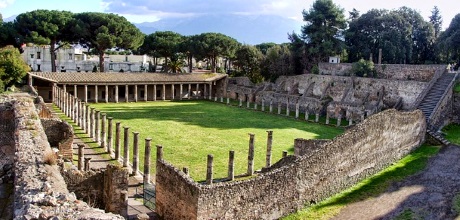
How long do you need in Pompeii?
Two hours is enough for a very selective route, but most first-time visitors benefit from at least three to four hours inside. The site is large, the streets are uneven and some houses open only at certain times. A leisurely visit with breaks may take most of a day.
Leave room for a late train or a queue at the entrance. A short visit can focus on the Forum, a domestic building and one or two public spaces. If your interest is archaeology, plan a full day and do not add a rushed afternoon trip to a distant town.
Tickets, names and the visitor limit
The official archaeological park now uses named tickets and a daily admission cap. The park lists Pompeii Express for the ancient city and Pompeii+ for additional suburban villas and related locations. Check precisely which area your ticket covers before paying. Carry identification matching the name on your booking.
The official park directs online purchases to its authorised channel and lists ticket offices at Porta Marina, Piazza Esedra and Piazza Anfiteatro. An advance PDF ticket can be displayed on a phone. On busy dates, booking ahead gives you more certainty, although entry procedures and security still take time.
Opening hours and seasonal planning
The park publishes a winter schedule from 15 October to 15 March: opening at 09:00, last admission at 15:30 and closing at 17:00. In the longer-day season, the published closing time is 19:00, with final entry at 17:30. Always check the date-specific official timetable because extraordinary closures and changed access can occur.
The last entry time is too late for a meaningful first visit. If you travel from Rome, aim for a morning arrival. In summer, early hours can be more comfortable than the middle of the day; in winter, shorter daylight makes a clear route more important.
From Naples by public transport
Regional trains connect Naples with the Pompeii area. Check which service you choose and which station suits your entrance, as Pompei has more than one station and different railway operators serve the area. The stop commonly used for the Porta Marina side is Pompei Scavi–Villa dei Misteri.
Check the current timetable and ticket with the rail operator, especially when construction or a strike is announced. Allow time to reach the correct platform in Naples. A guided tour with transport can simplify logistics, but read whether the price includes the archaeological ticket and whether the bus returns to your original departure point.
From Sorrento
A regional train links Sorrento with Pompei Scavi–Villa dei Misteri. This makes the ruins a feasible day trip, although services can be crowded in peak season. Buy the correct ticket and validate it when required by the operator.
An organised coach or small-group trip may be easier if you prefer a fixed meeting point or have mobility concerns. Check pickup location, group language and how many hours you actually get inside Pompeii. Some packages advertise a long day but spend substantial time on other stops.
From Rome
A Rome day trip usually starts with a train to Naples followed by a regional connection, or with an organised coach. The return journey makes the day long. Check the last departure that works for your hotel and reserve your major rail legs where appropriate.
If Pompeii is a main reason for your trip, an overnight stay in Naples, Sorrento or near the site can be more comfortable. You then have an earlier start and more time to explore. A coach tour makes sense when you want transport handled, but compare the time on site and the number of included stops.
Guided tour or independent visit?
A guide can explain the urban layout, the function of buildings and how archaeological interpretations have changed. Check professional credentials, group size and language. Some products include entrance and some require you to purchase it separately.
An independent visit offers more control over pace and breaks. Use the official map or visitor information and choose a few priorities before entering. The ruins tell a richer story when you spend time in a house and a public building instead of racing through every named highlight.
What to see on a first visit
The Forum was a centre of civic life. The amphitheatre shows the scale of public entertainment, while domestic buildings give a different view of the city. The theatre district and baths add context. Opening of individual rooms and houses can change for conservation work.
Our detailed guides to Pompeii, the theatre, the baths and the Lupanar can help you choose. The plaster casts deserve sensitive attention: they represent people who died in the eruption, not just unusual photo subjects.
Heat, footwear and accessibility
The exposed site can be hot in summer and wet or slippery in winter. Carry water, a hat and shoes that work on irregular stone paving. Shade and seating are unevenly distributed; plan breaks rather than assuming a café will be beside each attraction.
The park describes an accessible Pompeii for All route, with entry recommended at Piazza Anfiteatro. Accessibility varies across the archaeological area because of historic surfaces and conservation work. Check the official map for your needs before booking a tour that promises access to specific interiors.
Combining Pompeii with Vesuvius or Herculaneum
A combined Pompeii and Vesuvius day can work with a very early start, but both require separate travel and tickets. The crater visit is weather-dependent and involves its own walking conditions. Avoid promising yourself an unhurried Pompeii visit if the itinerary also includes a mountain excursion.
Herculaneum is smaller and offers a different perspective on the eruption. It is a worthwhile separate visit from Naples. Read our guides to Herculaneum and Vesuvius before deciding whether to combine or split the days.
Practical checklist
Before leaving, confirm your entrance, ticket type, name on the ticket, rail or tour departure, and return journey. Save tickets offline and carry ID. Take water, sun protection, suitable shoes and a charged phone.
When booking a tour, identify its meeting point and the exact amount of time inside the ruins. Check whether an audio guide, live guide, lunch and entrance are included. An attraction ticket and a transport ticket are separate unless the product explicitly bundles them.
Choosing an entrance
Porta Marina is a common arrival point for visitors coming from Pompei Scavi station. Piazza Esedra lies nearby, while Piazza Anfiteatro can be useful for an itinerary starting at the amphitheatre or for the park’s accessible route. The entrance printed on a guided tour meeting instruction may differ from the entrance you would choose independently. Check the actual meeting point on a map before leaving your train.
Do not assume you can cross the ruins quickly to join a group waiting at the other side. The site is extensive and navigation takes time. A practical plan puts your first sights near your entrance and leaves the opposite end for later, depending on which exits are open that day.
A route for a first visit
Begin by finding the Forum and its surrounding public buildings, then continue through a residential street to compare public and private spaces. A bath complex or theatre adds a third type of building. The amphitheatre is a longer walk from parts of the western entrance area, so decide whether it fits your available hours.
Use the park’s current visitor map rather than an old numbered list. Excavations, one-way arrangements and conservation work can alter the route. If you only have three hours, seeing a smaller selection carefully is more rewarding than trying to tick off every house mentioned in a guidebook.
What the site can and cannot tell you
Pompeii preserves streets, wall paintings, inscriptions and everyday objects, but it was a living city that changed over centuries. Not every visible structure dates from exactly the day of the eruption. Some displayed objects are replicas; many original finds are housed in museums, including the archaeological museum in Naples.
A guide or good interpretive material can distinguish what archaeologists know from what they infer. Look beyond the best-known disaster story: shops, water systems and repairs after earlier earthquakes say a great deal about daily urban life. Give yourself time to read the signs at several buildings.
Food, water and breaks
Carry enough drinking water, particularly when visiting in warm weather. On-site services and water points can change, and the walk from an open café to your next stop may be long. Plan a proper meal before or after the archaeological visit rather than relying on a short break between distant sections.
There may be restrictions on eating and on bringing large bags into the site. Check the park’s visitor rules in advance. If you are travelling with children, agree on a shorter route, point out a few recognizable places and build in a shaded pause before fatigue becomes a problem.
If weather or transport disrupts your plan
Heavy rain can make ancient paving slippery; intense heat can make a midday visit uncomfortable. The park may restrict specific areas for safety even when the rest remains open. Keep a flexible list of sights and check official alerts on the morning of travel.
Rail disruptions in the Naples area can affect a carefully timed return, especially if you have a separate high-speed ticket to Rome. Give yourself a generous connection and know the alternative station or service. A tour operator’s cancellation terms can also differ from the site’s entry policy.
Pompeii with children
School-age children often respond well to the street layout, the amphitheatre and the idea of shops and homes. Explain the human cost of the eruption in an age-appropriate way before reaching the casts. The ground is difficult for many strollers; ask about an accessible route and consider a carrier for younger children.
Do not plan the same number of sites as an adult archaeology enthusiast would. One striking public building, a home and a rest stop make a manageable visit. Bring hats and water for everyone and agree on where to meet if the group becomes separated.
Choosing where to stay
Pompei town is convenient for an early entrance and has restaurants and services outside the archaeological park. Naples offers more museums and onward connections, while Sorrento works for visitors also exploring the coast. Consider the specific station and entrance, not only the distance shown on a hotel listing.
If you plan a long Pompeii visit and another day at Herculaneum, a two-night base in the area can reduce repeated transfers. Look at checkout and luggage storage arrangements; carrying suitcases through the ruins is impractical and may conflict with bag rules.
Before paying for any timed service, confirm the exact date, departure or admission point and what the price includes. Save the operator’s current instructions offline, particularly when you will travel with luggage or have a separate onward reservation.
Frequently asked questions
Is Pompeii possible as a day trip from Rome? Yes, but it is a long day and transport must be planned carefully. Is a guide required? No; a guide can provide context, but independent visitors can use the official map and information.
Does a Pompeii ticket include Vesuvius? Usually no. Are all buildings always open? No; individual areas may close for conservation. What is the best time to arrive? Early enough to allow several hours, especially in winter.