Milan Cathedral, the Duomo di Milano, is a large Gothic church at the centre of the city. Its marble façade, stained-glass windows and rooftop terraces make it a varied attraction: you can explore the interior, study the building from outside, walk among its upper architectural details and visit the cathedral museum. These experiences have different tickets and access conditions.
Compare hotels, apartments and guesthouses by location, price and guest rating. Check the walking route, transport links and cancellation conditions before booking your stay.
For a first visit, decide whether you want the church, the roof or a broader combination before booking. A rooftop ticket does not necessarily include the interior, and lift access does not mean a route completely without stairs. This guide explains the main areas, practical choices and how to fit the Duomo into a Milan itinerary.
Milan Cathedral at a glance
- Location: Piazza del Duomo, in central Milan.
- Main interests: Gothic architecture, stained glass, sculpture and rooftop views.
- Roof access: stairs or lift products, with further route conditions to check.
- Other visits: museum, archaeological area and selected religious spaces.
- Transport: Duomo metro station serves the square.
- Planning: allow several hours for a combined church, terraces and museum visit.
The cathedral is an active religious building as well as a visitor attraction. Worship, ceremonies, restoration and weather can affect access. Always compare the current calendar with the particular ticket you intend to buy rather than relying on one general timetable for the whole complex.

A short history of the Duomo
Construction began in 1386 and continued over centuries. The building therefore reflects a long sequence of architectural decisions, artistic commissions and practical changes. Its Gothic forms belong to a wider European tradition, but the cathedral also has a distinctly Milanese history involving the city’s rulers, craftsmen, donors and religious institutions.
The use of Candoglia marble is central to the building’s appearance and maintenance. Looking after the Duomo remains an ongoing task: marble exposed to pollution and weather requires monitoring, restoration and replacement. Scaffolding or a closed section is part of the continuing care of a large historic monument rather than an unusual interruption to an otherwise permanently finished building.
The Veneranda Fabbrica del Duomo oversees this long-standing work. Its visitor information and notices are the best starting point for current access details. Understanding that the cathedral is still maintained through an active institution helps explain the museum collection and the restoration work visible around the building.
The façade and a walk around the exterior
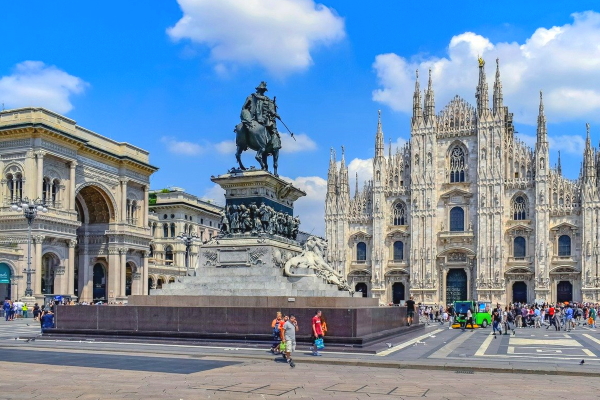
The main façade faces Piazza del Duomo and is the obvious place to begin. Stand back far enough to see its overall arrangement, then look at the portals, sculptural figures and the repeated vertical lines leading upward. The surface contains so much detail that it is easy to focus only on the central door and miss the wider composition.
A walk around the sides gives another perspective on the scale of the church. Buttresses, windows and layers of stone decoration become easier to understand as you move. Keep clear of controlled entrance areas and follow barriers around works or service access. The route around the building is part of a busy city square rather than a pedestrian museum enclosure.
The gilded Madonnina above the cathedral is one of Milan’s most recognisable symbols. You can see it from below and from parts of the terraces, depending on the route and viewpoint. It is a feature to look for rather than a promise that every rooftop position gives the same unobstructed photograph.
Inside Milan Cathedral
The interior’s scale is expressed through tall columns, long sightlines and the relationship between the nave and the high vaulting. Give your eyes time to adjust after arriving from the bright square. The light and atmosphere change with the weather and time of day, particularly around the stained-glass windows.
Walk slowly and choose a few details rather than attempting to identify every monument. Sculptures, altars, floor patterns and chapels reflect the building’s long history. Some religious areas can be reserved for worship, and access to particular spaces may be limited. Respect the route and any signs distinguishing sightseeing from prayer.
Stained glass and sculpture
The windows contain biblical narratives, individual figures and decorative designs made across different periods. From floor level, some details are distant, but you can still observe the colours and the organisation of the scenes. A small pair of binoculars may be useful if allowed under the current rules, although a guide or museum display can provide context without specialised equipment.
The cathedral’s sculpture is not limited to the façade. Interior figures and monuments reward a closer look, while the museum offers another setting for studying originals and objects connected with the building. The differences between works made for distant exterior positions and those intended for close viewing are particularly interesting.

Walking on the cathedral roof
The terraces are one of the Duomo’s most distinctive experiences. They let visitors look closely at pinnacles, buttresses and carved decoration that appears tiny from the square. The city panorama is only part of the appeal: the building itself becomes the main subject as you walk among its upper levels.
The official description distinguishes lower walkways from a higher central terrace reached by further stairs. This means that an ascent by lift should not be interpreted as a guarantee of completely step-free access throughout. Read the current route and accessibility information before choosing between products.
For a detailed architectural description, see the official terraces page. Routes can change with restoration, safety arrangements and weather. Avoid relying on old statements that visitors always descend in one particular way or that a fixed number of steps describes every ticket option.
Stairs or lift?
The stairs option involves a substantial climb and may suit visitors who are comfortable with sustained steps. The lift can reduce the initial effort, but queues, remaining stairs and the walking surface still matter. Choose according to physical needs and the actual route conditions rather than assuming the more expensive product solves every access issue.
Visitors using mobility aids should contact the operator for specific guidance. Ask which terrace areas are reachable, what assistance is available and whether current works affect the route. A general claim that a lift exists is not enough to determine whether the visit meets an individual’s requirements.
Weather and rooftop safety
The roof is outdoors and exposed to sun, wind, rain and seasonal cold. Wear shoes with a secure grip and carry appropriate protection for the weather. Stone surfaces and stairs require care, particularly when wet. Staff may restrict or alter the route when conditions make part of it unsafe.
Views toward the wider region depend on visibility, and distant mountains are not guaranteed. Check the weather close to your visit and review the ticket conditions concerning closures or changes. Keep hands free when using stairs and follow the marked circulation rather than stopping where other visitors need to pass.
Milan Cathedral tickets: choose the areas you want
There are separate and combined products for the church, terraces and additional sites. A roof-only ticket may exclude the cathedral interior and museum. A combination may include those areas but still leave out the archaeological route, a particular crypt or an audio guide. Read each inclusion explicitly before buying.
Start with the official Duomo website and follow its ticket links for direct admission. For a reseller or guided visit, compare the service, entrance arrangement, meeting point and cancellation terms. A guided tour, ordinary lift admission and a faster access product are distinct offers.
Check validity and whether the ticket allows one entry to each site on the same day or across a longer period. Reduced admission and free-entry conditions may require documentation. Do not use an old price list as a guarantee: the operator updates ticket combinations, fees and conditions over time.
Reservations and queues
Buying ahead can reduce uncertainty and helps you choose the admission arrangement you want. It does not remove security screening or guarantee an entirely queue-free experience. Waiting can occur for checks, lifts or controlled rooftop circulation even when the entrance ticket is already purchased.
Find the correct line for your ticket rather than assuming every queue around the cathedral serves the same entrance. Keep the ticket and full confirmation available on your phone, preferably downloaded. Hosted and guided products can have meeting points away from the doors, so read those instructions before reaching the square.

Opening times and the museum’s closing day
The cathedral, terraces, museum and archaeological areas do not necessarily share identical hours. The official date-specific calendar is the most useful source for the period you are visiting. Last ticket sales and last admission are earlier than final closing, and staff may start clearing areas before the building shuts.
The Duomo Museum normally closes on Wednesday. Religious areas can have additional restrictions during services or festivals, while terrace access can change because of weather. Check both ordinary hours and current notices on the official visitor calendar. A pass including several areas does not make a closed museum available.

The Duomo Museum and archaeological area
The museum is in the Royal Palace building beside the cathedral square. It displays objects connected with the cathedral’s construction, decoration and religious life. Seeing works at closer range gives a useful contrast with the experience of looking up at sculpture on the church itself. Our Milan Cathedral Museum guide provides an introduction.
The archaeological area introduces the earlier buildings and religious history beneath the present complex. It is a different experience from the rooftop walk and may require a specific inclusion. If this is important to you, check access before purchasing rather than assuming every combined ticket covers it.
For an architecture-focused visit, the interior, terraces and museum make a coherent combination. For a shorter stop, select the two areas that best match your interests. Trying to squeeze every part into a narrow gap before a train often means spending more time watching the clock than studying the cathedral.
How much time to allow
For the cathedral interior alone, allow at least a meaningful hour if you want more than a quick circuit. A roof visit requires extra time for checks, ascent, walking and descent. A combined programme with the museum can occupy several hours, particularly if there are queues or you like reading labels.
These are planning estimates, not prescribed visit lengths. Keep a buffer before your next timed reservation and consider a meal or rest after a longer combination. The surrounding square provides convenient breaks, but nearby cafés and restaurants vary in price and service style.
Getting there and what is nearby
Duomo metro station serves the square on Milan’s central network. Check current service information if you are travelling with luggage or require accessible exits. From major rail stations, the metro is often convenient, while taxis can help with particular access needs. Driving directly into the centre involves traffic restrictions and parking complications.
The Galleria Vittorio Emanuele II opens onto the square and is easy to combine with the Duomo. Its covered arcades lead toward the area around La Scala. Walking through the gallery after the cathedral provides a change from religious architecture to Milan’s commercial and civic setting.
For more art, the Pinacoteca Ambrosiana is another central option. Use our Milan city guide to choose nearby stops and avoid crossing the city unnecessarily between fixed reservations. Visitors travelling onwards can also compare day trips to Lake Como, although that deserves separate time rather than an add-on squeezed into the cathedral morning.
Clothing, bags and a comfortable visit
Dress appropriately for an active church and follow the current rules on covered shoulders and knees. Carry only what you need and read baggage restrictions before arriving from a hotel checkout or airport transfer. Security procedures can affect which objects are allowed, and storage should not be assumed for every kind of luggage.
For visitors with limited energy, choose a shorter combination and build in rest rather than booking the maximum number of sites. The church floor, museum and terraces involve different movement demands. Confirm accessible arrangements directly when they affect your decision, then choose the ticket that matches the route you can comfortably use.
Check the date, meeting point, cancellation terms and the exact areas included. Special routes, dome climbs, rooftop lifts and guided services depend on the selected offer. Security checks can still involve waiting.