Leonardo da Vinci’s Last Supper is painted on a wall in the former refectory beside Santa Maria delle Grazie in Milan. It is visited through the Museo del Cenacolo Vinciano, with controlled entry and a short appointment inside the room. Seeing the painting therefore requires more advance organisation than an ordinary church or museum visit.
Tickets and guided visits
Confirm that Last Supper admission is included, along with the actual appointment, meeting point and required early arrival. Tour duration is not the time spent inside the refectory.
The essential rules are straightforward: everyone needs a reservation, you must arrive ahead of the booked visit and time in the refectory is limited. This guide explains how to organise admission, what to look for in the painting and how to build a Milan day around the appointment.
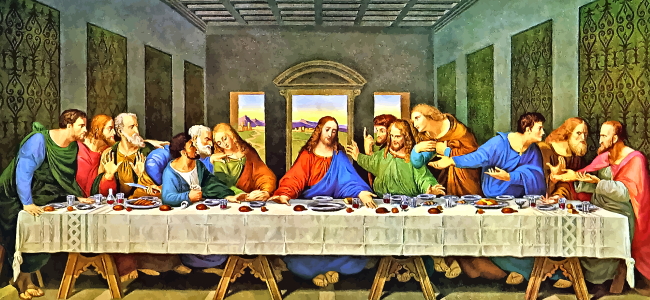
The Last Supper in Milan at a glance
- Artist: Leonardo da Vinci.
- Location: the former dining room adjoining Santa Maria delle Grazie.
- Reservation: compulsory for all visitors, including those entitled to free admission.
- Viewing time: 15 minutes in the refectory under the current arrangements.
- Arrival: the museum requires arrival at least 30 minutes before the booked visit.
- Regular opening: Tuesday to Sunday; check the official date and current notices.
The short viewing time does not mean the whole visit takes only a quarter of an hour. Ticket procedures, checking documents, storing permitted belongings and controlled access all take additional time. Organise transport and other reservations around the required arrival, not just the moment you expect to enter the room.
What Leonardo painted
The scene represents the meal at which Christ tells the apostles that one of them will betray him. Leonardo gives the figures different reactions through their expressions, hands and body positions. Rather than treating the painting as a static line of portraits, look at the movement of surprise and discussion around the table.
Christ occupies the centre of the composition. The architectural lines draw attention toward him, while the apostles gather in groups across the table. The room depicted in the painting relates visually to the real refectory, extending the sense of space beyond the wall. Standing in the actual room makes that relationship more apparent than looking at a small reproduction.
The painting belongs to Leonardo’s work in late-fifteenth-century Milan under Ludovico Sforza. It is a mural made for this specific setting, not a canvas later installed in a museum. Its relationship with the dining room and monastery is therefore part of the work’s meaning.
What to notice during the limited viewing time
Begin with the whole image: the arrangement of the table, Christ’s central position and the perspective of the painted room. Then choose one group of apostles and follow their gestures. This is more manageable than attempting to identify every person and symbol before the session ends.
Look also at the relationship between the figures and the table. Hands, turned heads and leaning bodies create connections across the composition. The tension comes from reactions to a spoken announcement rather than from a physical action. Reading a brief introduction beforehand helps you spend the actual visit looking instead of searching for explanations on your phone.
Where to stay in Milan
Compare hotels, apartments and guesthouses by location, price and guest rating. Check transport connections, access with luggage and cancellation conditions before booking your stay.
Why the painting is so fragile
Leonardo used an experimental wall-painting method rather than the traditional technique of applying pigments to fresh plaster throughout the work. The resulting surface was vulnerable, and deterioration began early. Environmental conditions, historic alterations, damage and previous restoration campaigns added further complications.
Its present appearance reflects both surviving material and a long conservation history. Expect a delicate wall painting rather than the intense colours and sharp edges of some digital reproductions. That condition is part of understanding the original. The controlled access exists to protect a vulnerable object in its original architectural setting.
The museum’s official artwork introduction is useful preparation. For current visitor procedures, use the separate admission information rather than assuming an art-history article also describes today’s booking system.
How to book Last Supper tickets
Begin on the official Cenacolo Vinciano information page and follow its booking links. Direct admission and guided experiences are different products. Check the actual museum access, date, time and services included before paying, especially when comparing an inexpensive entry ticket with a longer city tour.
The museum releases appointments in batches and publishes updates about availability. Release notices can change, so consult the current announcement rather than relying on a fixed calendar copied from an old guide. If your first search shows no spaces, check the official advice about later availability and additional releases.
Reservations are mandatory even for visitors who qualify for free entry. This includes children who may not need to pay a standard admission charge. Make sure every member of your party has the required booking rather than assuming that an adult ticket covers a child’s place.
Names, identification and booking details
Tickets are personal under the museum’s current arrangements. Enter each visitor’s details carefully and carry the identification required by the confirmation. Name changes, date changes and refunds are restricted, so check the conditions before purchasing. If a seller offers different cancellation terms, read what applies to the museum entry and what applies to the seller’s own services.
Download the full confirmation rather than keeping only a payment receipt. It may contain instructions for collection, a meeting point or an earlier arrival time. If a guided product requires meeting a representative, follow that arrangement as well as the museum’s entry procedure.
What happens on arrival
The museum requires visitors to arrive at least 30 minutes before the reserved visit. This allows time for the ticket process and other formalities. Late arrival can mean losing the right to enter, so treat that earlier time as the real deadline when planning your journey.
Find the museum ticket office and entrance described in the booking instructions. The church and the museum are closely associated but have separate visitor arrangements. Entering Santa Maria delle Grazie does not automatically take you into the refectory containing Leonardo’s painting.
Access takes place in controlled groups through a managed sequence. Follow staff instructions and remain with the correct session. The museum currently limits the time in the refectory to 15 minutes. A longer guided-tour duration usually includes explanation elsewhere and should not be interpreted as extended unrestricted time in front of the painting.
Opening hours and closed days
The regular museum schedule is Tuesday to Sunday, 8:15 a.m. to 7 p.m., with the last session at 6:45 p.m. Monday is normally closed, but special openings and holiday arrangements must be checked separately. The availability of a particular appointment depends on the current booking calendar.
Check official notices shortly before the visit as well as when booking. A general opening time is not a substitute for a reservation, and arriving at any point during those hours will not secure admission. The fixed session on your confirmation determines when you can enter.
If ordinary tickets are unavailable
A guided tour may have access allocated under its own arrangements, but availability still has limits. Compare the complete itinerary and confirm explicitly that admission to the Last Supper is included. A walking tour of Leonardo’s Milan or the exterior of Santa Maria delle Grazie is not necessarily a visit to the painting.
Be cautious about building the rest of your trip around an unconfirmed promise of later admission. Before paying, verify the seller, the date, the meeting instructions and the actual entry time. The museum’s own links and information provide the most reliable starting point for checking what an offer means.
If no suitable appointment is available, Milan still offers substantial art and architectural visits. The Pinacoteca Ambrosiana, Duomo and other collections can form a worthwhile itinerary, but none should be described as a substitute containing the original Last Supper.
Getting to Santa Maria delle Grazie
The museum is west of the main cathedral area, near Santa Maria delle Grazie. Check a current public-transport route from your starting point and leave a comfortable walking margin. Cadorna and nearby metro stops can be useful depending on the journey, but the final approach and entrance still require time.
If arriving from an airport or long-distance train, avoid choosing a visit immediately after the scheduled arrival. Transfers, delays and luggage storage can affect the appointment. A hotel drop-off or a separate storage plan is usually easier than reaching a tightly controlled museum with a suitcase.
Walking from central Milan can be pleasant when time and mobility allow. Use a map and calculate the journey to the ticket-office arrival deadline. Do not use only the published duration of the viewing session when deciding how late you can leave the Duomo area.
Bags, photography and accessibility
The museum restricts bulky luggage and lists limited lockers for temporary needs. Their existence should not be treated as guaranteed storage for every visitor or large suitcase. Read the current rules before arrival and bring as little as practical. Food and beverages are restricted inside the museum.
Follow the current photography rules and staff instructions, including restrictions on flash and equipment. Time in the room is limited, and viewing the painting directly is more rewarding than spending the whole session on a screen. Avoid blocking other visitors while trying to capture a particular angle.
Visitors who need accessible arrangements should review the museum’s official guidance and contact staff about specific requirements. A short timed visit can still involve waiting, controlled doors and a group sequence. Clarify those details in advance if they affect comfort or assistance needs.
The Crucifixion and the refectory setting
The room contains another major wall painting, the Crucifixion by Giovanni Donato da Montorfano, opposite Leonardo’s work. It deserves a look during the session rather than being overlooked entirely. Comparing the two walls gives a sense of the refectory as a decorated space instead of a room built around a single isolated masterpiece.
Remember also the practical function of the original dining room. The subject of a shared sacred meal had a clear relationship with the monastic setting. This context becomes easier to appreciate when you pause to look at the room’s proportions and the position of both paintings.
A realistic Milan day around your reservation
Make the Last Supper appointment the fixed point and leave the surrounding activities flexible. You could combine it with time around Santa Maria delle Grazie and a walk through central Milan, then visit the cathedral terraces at a comfortably separated time. The two attractions have different routes and admission procedures.
If your appointment is in the morning, leave time afterwards for a break and the rest of the neighbourhood. If it is later, avoid a preceding trip whose return depends on a tight rail connection. Our Milan guide provides a starting point for arranging the wider day.
Is a guided visit useful?
A guide can help explain the composition, conservation history and setting before you enter. That preparation can be valuable because the actual viewing is short. The benefit depends on the quality and focus of the service, not simply on whether the ticket costs more than direct admission.
Independent visitors can also prepare effectively with the museum’s own materials. Read a brief introduction, choose a few details to observe and arrive calmly. The key is to spend the limited time looking at the original work with some understanding of what you are seeing.
Preparing without overloading the visit
A short introduction to the subject, a look at a reproduction and a clear understanding of the entry process are enough preparation for most visitors. You do not need to memorise every apostle or scholarly interpretation. Choose two or three details you would like to notice, then leave room for your own first impression of the wall and room.
It is also useful to check whether everyone in your group understands the short viewing period. Someone expecting a long museum circuit may be surprised by the controlled session, while a visitor who knows the format can concentrate on the work from the moment of entry.
Before continuing your Milan day
After leaving, allow time to collect belongings and discuss what you saw before rushing elsewhere. The painting’s condition and the difference between the original and reproductions often become clearer with a few minutes of reflection. A nearby break can be a sensible part of the visit rather than wasted time between attractions.
Keep any subsequent reservation comfortably separated, especially when travelling with children or someone who needs a slower pace. The official session may last 15 minutes, but the experience includes arrival, preparation and departure as well as the time in front of the painting.
Tickets and guided visits
Confirm that Last Supper admission is included, along with the actual appointment, meeting point and required early arrival. Tour duration is not the time spent inside the refectory.