Florence’s churches are more than places of worship. They preserve paintings, sculpture, architecture and the history of the city’s most powerful families and guilds. The Cathedral of Santa Maria del Fiore is the most famous, but Santa Croce, Santa Maria Novella, Orsanmichele and San Lorenzo each offer a different experience. This guide introduces five important churches and explains what to look for, how to plan visits and how to choose which interiors are worth your time.
Opening times and visitor rules can change for worship, restoration and special events. Some churches are free to enter for prayer while access to museum areas, chapels or cloisters requires a ticket. Check the official site for each complex shortly before visiting, and dress respectfully. Florence’s historic centre is compact, so several churches can be combined in a day, but seeing them all properly takes longer than a quick photo stop.
1. Florence Cathedral: Santa Maria del Fiore
Florence Cathedral dominates Piazza del Duomo with its large dome, patterned marble exterior and richly decorated façade. The cathedral, dedicated to Santa Maria del Fiore, is the city’s most recognisable church and a central landmark in the historic centre. Its interior is much more spacious and restrained than the exterior might suggest, while the dome and surrounding monuments offer separate visits.
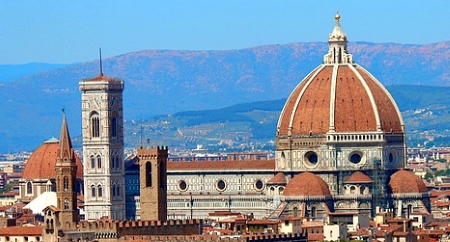
Visitors interested in architecture can look at the scale of the nave, the clock by Paolo Uccello and the frescoes inside the dome. Climbing Brunelleschi’s dome involves a long stairway and narrow passages; there is no lift, and the climb is not suitable for everyone. The cathedral itself and the dome climb have different access arrangements. See our guides to the Cathedral of Florence and the dome for more detail.
2. Basilica of Santa Croce
Santa Croce stands in a large square east of the cathedral and is known for its monumental tombs, chapels and works of art. The basilica is associated with important Florentine figures, including Michelangelo and Galileo, whose tomb monuments are inside. Dante is commemorated by a cenotaph, but his remains are in Ravenna, where he died in exile. The distinction is useful for visitors who have heard that all three are buried here.
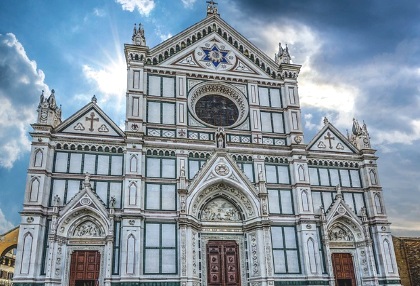
Santa Croce is a church and a monumental complex, with chapels, cloisters and a museum area. Visitors can see works associated with Giotto and other artists, along with memorials and architectural details spanning several centuries. Allow more time than you might for a simple church visit. Current hours, ticket prices and accessibility information are published by the official Santa Croce visitor site. See also our page on the Basilica of Santa Croce.
>>> Browse Florence tickets and activities
3. Basilica of Santa Maria Novella
Santa Maria Novella stands close to Florence’s main railway station, making it one of the easiest churches to visit on arrival or departure day. Its geometric marble façade is one of the most recognisable examples of Renaissance design in the city. Inside, the complex includes frescoed chapels and important works such as Masaccio’s Trinity, as well as cloisters and a museum route.
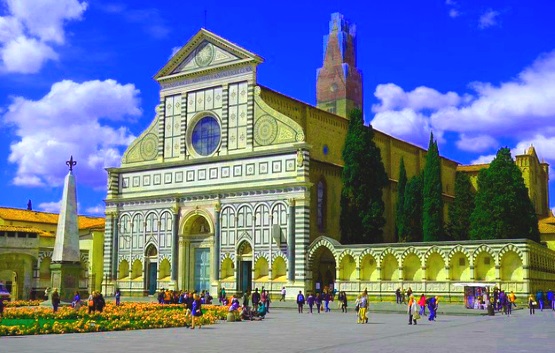
The visit is more extensive than a quick look at the façade. Tickets cover the monumental complex and hours differ by day and religious calendar. The basilica remains open for prayer and services, and visitor access may be adjusted around worship. Check the official visitor page for the latest schedule and ticket information. Our article on Santa Maria Novella provides additional background.
4. Orsanmichele
Orsanmichele is a distinctive building in the centre of Florence, between Piazza della Signoria and the cathedral area. It began as a loggia and grain market before becoming a church. The building’s history reflects the role of Florence’s craft guilds: the exterior niches contain sculptures commissioned by guilds, while the interior has a different, enclosed character from the city’s larger basilicas.
Look at the statues and reliefs on the exterior as you walk around the building. Many of the originals have been moved to museum collections for conservation, with copies in their place. The museum occupies the upper levels and offers views of the architecture and surrounding streets, when open. Because opening schedules can be more limited than those of major churches, check the official museum information before planning a visit.
5. Basilica of San Lorenzo
San Lorenzo is closely associated with the Medici family and lies near the Mercato Centrale. The church has an austere exterior and a Renaissance interior connected with Filippo Brunelleschi. The complex includes the Old Sacristy, the New Sacristy designed by Michelangelo, the Medici Chapels and the Laurentian Library, although these areas may have separate opening arrangements and tickets.
The present basilica developed over time on a site with early Christian roots. It should not be described simply as an unchanged fourth-century building: the current church is largely the result of later rebuilding, particularly the Renaissance project. Visitors with an interest in architecture can compare Brunelleschi’s spaces with Michelangelo’s work in the Medici complex. Check which areas are open and whether a separate ticket or timed entry is needed.
Choosing which churches to visit
If you have only one day, start with the cathedral area and choose one additional church based on your interests. Santa Croce suits visitors interested in tombs, frescoes and memorials; Santa Maria Novella offers a compact route near the station; San Lorenzo is a good choice for Medici history; Orsanmichele can be added during a walk through the centre. A longer stay allows time for all five without rushing.
Churches are active religious places as well as cultural attractions. Opening hours may be interrupted by services, and modest clothing is expected. Photography rules vary, particularly in chapels and museum areas. Follow signs and staff instructions. If you need step-free access, consult each site’s accessibility page, since historic buildings often have uneven floors, stairs or restricted routes.
Florence tickets and guided visits
Guided tours can help explain the art and history of Florence’s churches. Check the route, included entrance tickets, language, meeting point and any dress requirements for the selected activity.
Suggested walking route
A practical route can begin at Santa Maria Novella, continue east through the historic centre to Orsanmichele, then turn towards the cathedral complex. From Piazza del Duomo, walk to San Lorenzo and the market area, and finish at Santa Croce. This route covers several central sights but involves a fair amount of walking and does not include full interior visits. If you want to see the museums and chapels, split the route across two days.
Allow time for queues and timed admissions, especially around the cathedral, Santa Croce and the Medici Chapels. Do not assume that a combined ticket covers every church or museum. Tickets often have specific validity periods and entry slots. Keep a digital or printed copy available, and check the address of the entrance because some complexes use a separate visitor entrance.
Practical visitor advice
- Check official opening times on the day or shortly before your visit.
- Plan around worship and religious holidays.
- Wear clothing that covers shoulders and knees where required.
- Bring comfortable shoes; historic floors can be uneven.
- Allow more time for monumental complexes than for a single church interior.
- Ask about photography restrictions before taking pictures.
- Check accessibility information for each site individually.
Where to stay in Florence
Accommodation near the historic centre makes it easier to visit churches early and return to your hotel between sightseeing. The station area is convenient for train travel, while Santa Croce and Oltrarno offer different neighbourhood settings. Compare the precise location, lift access and cancellation terms, and remember that cars are restricted in much of the centre.
Find accommodation in Florence
Compare hotels and apartments by location and transport access. If you plan to visit several churches, a central base can reduce travel time between sites.
Frequently asked questions
Which church is the most famous in Florence?
The Cathedral of Santa Maria del Fiore is the city’s best-known church, particularly for its dome and marble exterior. The other churches offer important art and history with different visitor experiences.
Is Santa Croce the burial place of Dante?
No. Dante is commemorated by a cenotaph in Santa Croce, but his remains are in Ravenna.
Are Florence churches free to enter?
Policies vary. Some churches allow free access for prayer, while visitor routes, museums and monumental complexes require tickets. Always check the current official information.
Can I visit several churches in one day?
You can see the exteriors and visit a few interiors in one day, but visiting all five in depth would be rushed. Choose sites according to your interests and allow time for ticketed areas.
Do I need to book in advance?
Advance booking may be useful for popular ticketed sites and timed visits. Requirements differ, so confirm directly with the official venue before travelling.
How to make the most of a church visit
Look beyond the main altar and the most famous artwork. In many Florentine churches, side chapels, floor tombs, cloisters and sacristies contain works that explain how the building developed and who supported it. A short audio guide or a printed plan can help visitors understand the layout, especially in complexes where several spaces are open on one ticket. If interpretation is not available in your language, take a moment to read the signs at the entrance and identify the areas included in your admission.
Church visits also reward a slower pace. Allow yourself time to look at the architecture before taking photographs, and pause where the route permits without blocking others. Some chapels are still used for prayer, and silence is appropriate even when the site is busy. Photography with flash may be prohibited to protect artworks or avoid disturbing worshippers. When in doubt, ask staff rather than assuming that a rule is the same in every building.
Art and architecture across the five churches
The five sites show how Florence’s religious architecture changed from medieval civic structures to Renaissance spaces and later memorial complexes. The cathedral’s dome represents a major engineering achievement, Santa Croce is known for its chapels and tombs, and Santa Maria Novella brings together Gothic structure and Renaissance decoration. Orsanmichele’s guild niches connect public sculpture with the city’s trade associations, while San Lorenzo reflects the influence of the Medici and the work of leading architects.
Visitors do not need specialist knowledge to enjoy these differences. Notice the contrast between a broad basilica, a compact church and a building that once served commercial purposes. Look at how light enters each interior, how decoration is concentrated around altars or chapels, and how the exterior relates to its square or street. These observations make the churches more distinct from one another than a checklist of famous names alone.
Visiting with limited time
If you have only a few hours, choose one church interior and enjoy the others from outside. The cathedral square, Orsanmichele and San Lorenzo are close together, so they can be combined in a central walk. Santa Croce and Santa Maria Novella require a small detour but are straightforward to reach on foot. This approach keeps the day manageable and leaves time for the art rather than spending the whole visit moving between entrances.
Getting between the churches
Central Florence is walkable, but cobbled streets and visitor crowds affect travel times. Use a map to identify the correct entrance, especially for large complexes where the ticket office is not beside the main church door. Public transport can help with longer journeys, but most of these five sites are easiest to connect on foot.
Check before setting out
On public holidays, feast days or restoration periods, an itinerary may need to change. Verify the official notices and leave a flexible gap in the day.
Summary
Florence’s churches tell different parts of the city’s story. The cathedral is the landmark, Santa Croce combines art and memorials, Santa Maria Novella is rich in Renaissance works, Orsanmichele reflects guild history, and San Lorenzo reveals Medici patronage. Check each site’s current hours and access rules, and choose a manageable route rather than trying to rush through every interior.