At a glance
- The staircase links Piazza di Spagna with Trinità dei Monti.
- Walking up or down is free; sitting on the monument is prohibited.
- Spagna on metro line A is the nearest station for many visitors.
- The Barcaccia fountain stands at the foot of the steps.
- A short visit fits easily with Trevi Fountain and Villa Borghese.
Why visit the Spanish Steps?
The Spanish Steps are a broad eighteenth-century staircase in the heart of Rome. Their curves and landings connect Piazza di Spagna below with the church of Trinità dei Monti above. The composition is attractive from both directions: from the square you see the rising stairs, while the top offers a view back over nearby streets.
It is a public monument rather than a ticketed attraction. A visit can take fifteen minutes or form part of a longer walk. What matters most today is using the stairs respectfully. Older travel accounts describing crowds sitting and eating on the steps no longer reflect the rules.
Important for travellers to Rome: We have only seen queues of hundreds of metres or several hours in Europe in Rome so far. This is especially true for St. Peter’s Basilica, the Colosseum and the Vatican Museum. Tickets without queuing (skip-the-line tickets) should be bought in advance on the internet and go past the queue!: Browse Rome tickets and tours at Tiqets
Where are they?
Piazza di Spagna lies in central Rome north of the Trevi Fountain. The Spagna metro station on line A is a convenient access point. Check the correct station exit, especially if you need to avoid stairs on the approach.
The upper end of the staircase is close to Trinità dei Monti and the Pincio side of the centre. A navigation app may take you either to the lower square or the upper terrace. Decide where you want to start before walking from another sight.
Can you sit on the steps?
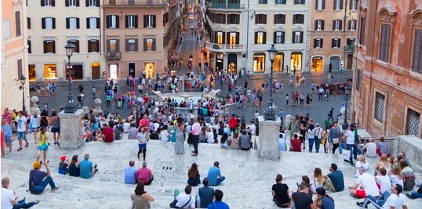
No. Rome’s urban police regulation protects monuments and includes a prohibition on sitting on them. The Spanish Steps are treated as a monument. Walk up or down, pause standing where safe and take photographs without blocking others.
Do not treat the staircase as a picnic area or a meeting place for a long seated rest. Enforcement may involve a fine. If you need a break, look for an appropriate bench or café away from the monument. This is especially important because old articles and photos still show visitors sitting there.
History and design
The staircase was built in the 1720s to join the square with the church on the hill. Francesco De Sanctis designed its changing widths, ramps and landings. The result is more than a straight flight of steps: it is a carefully shaped urban space.
The name relates to the Spanish presence around the square below. At the top stands a church associated with the French community. The design connected two parts of the city that had previously been separated by a difficult slope.
Fontana della Barcaccia
At the foot of the steps stands the low boat-shaped Barcaccia fountain. It is associated with Pietro Bernini, father of Gian Lorenzo Bernini. Its scale is different from the theatrical Trevi Fountain, so move close enough to see the boat form without leaning on the structure.
The fountain is part of the public square and can be viewed without a ticket. Keep the edges clear and follow local rules on eating and behaviour around monuments. A photo taken from the side can include both fountain and staircase.
Trinità dei Monti
At the upper end is the church of Trinità dei Monti. The façade helps frame the view from the square. Church entry, religious services and any temporary restrictions should be checked locally if you plan more than an exterior visit.
Do not assume that an open staircase means the church is open. Dress appropriately for a place of worship. The surrounding area also offers a useful route toward the Pincio and Villa Borghese.
Best time to visit
The steps are busy during much of the day. Early morning can be calmer, while evening lighting changes the atmosphere. Weather, holidays and local events affect crowding more than a fixed ‘best hour’ does.
For photos, avoid standing in the centre of a busy passage. Walk a little to either side and let others pass. If you want a quieter experience, make this the first stop of a walking day rather than arriving between large tour groups.
A walking route to Trevi Fountain
From Piazza di Spagna you can walk toward the Trevi Fountain through central streets. The route is short enough for a relaxed walk, but crowds and traffic crossings add time. Stop for a meal or café away from the busiest corners if you need a break.
Continue toward the Pantheon or Piazza Navona for a longer centre itinerary. Separate opening and ticket rules apply to indoor sights.
Via dei Condotti and shopping
Via dei Condotti runs from the square and is known for luxury shops. You can walk through without shopping. The street gives a different impression of the area from the church and fountain, and it is often crowded.
If you are looking for ordinary cafés or a quieter lunch, walk a few streets away from the central shopping corridor. Compare prices before ordering. The presence of expensive shops does not make the entire neighbourhood inaccessible to budget travellers.
Keats-Shelley House
The building beside the steps is connected with the poet John Keats and now houses a museum. It has its own opening hours and ticket conditions. A visit is especially relevant if you are interested in Romantic literature.
The museum is separate from the free staircase. Do not buy a Rome attractions bundle solely because it mentions the Spanish Steps; the outdoor monument itself needs no admission. Evaluate each included indoor site individually.
Pincio and Villa Borghese
From the upper area you can continue toward the Pincio terrace and Villa Borghese. The park offers more room for a break than Piazza di Spagna. It is an uphill walk from parts of the centre.
The Borghese Gallery is a ticketed museum with limited admission and should not be confused with the freely accessible park. Check its reservation rules if you want to combine a staircase walk with art.
Spring flowers and seasonal views
In spring, displays of azaleas can colour the steps around April and May. The exact timing depends on the city’s arrangements and seasonal conditions. Do not promise yourself flowers on a particular date without checking current information.
At other times, the stone and architecture remain the main attraction. Rain can make stairs slippery; comfortable footwear matters more than finding a perfect photo spot.
Accessibility
The monument is a large staircase and is not a step-free route between the two levels. If you cannot climb steps, plan an alternative route or public transport that reaches the area you need. Check station lifts and current works in advance.
You can enjoy the view from Piazza di Spagna without climbing. People with reduced mobility should consider where their next destination lies before choosing an upper or lower arrival point.
Families and children
Children can enjoy the shape of the steps and fountain, but this is a busy public place. Hold hands where the crowd is dense and agree on a meeting point. Explain that sitting and picnicking on the monument are not permitted.
A park visit afterward can give everyone space to rest. Do not plan a rapid climb followed immediately by another long walking route on a hot day. Carry water and use appropriate rest areas.
Tickets and guided tours
There is no ticket for walking on the Spanish Steps. A guided walking tour may include an explanation of Piazza di Spagna and nearby monuments; read the itinerary and its meeting point. Do not mistake a paid tour listing for an entrance requirement.
A broader Rome ticket may be useful for other sights, but compare the actual admissions included. Colosseum or museum reservations have their own rules and should be planned separately from this free stop.
Nearby hotels
The Piazza di Spagna area is central and often convenient for walking. It can also be expensive and busy. Compare hotel location with your arrival station, evening plans and any lift or accessibility needs.
A room a few metro stops away may be better value. Check whether you need to carry bags up stairs or through a crowded street to reach the accommodation. The nearest metro stop is not necessarily the easiest exit.
Photography and courtesy
Photograph the whole staircase from the lower square or look down from above. Leave the main walking lines clear. Drones and professional equipment may require separate permissions, so keep an ordinary visit simple.
Avoid touching the fountain or posing in a way that risks damaging stone. The same courtesy helps other visitors experience the setting without weaving around a photo shoot.
The staircase as an urban route
The monument’s two ends lead to different walks. From the bottom you can continue toward the shopping streets and Trevi Fountain. From the top you can head toward Pincio or find another route through elevated streets.
Plan your direction according to your next stop. Climbing simply to descend the same steps may not be worthwhile for someone with knee pain, even though the view from above is pleasant.
At the square below
Piazza di Spagna is more than the base of the stairs. Look at its fountain, surrounding buildings and the way streets radiate into the neighbourhood. People often gather here before continuing to other sights.
If the square is very busy, a short circuit around its edge gives a better view than standing in the main flow. Keep a little distance from the fountain while photographing it.
An early morning route
Start at the lower square before the main sightseeing crowds, walk up the steps and continue toward Pincio. You can then descend toward another part of the city rather than returning along the same route.
The timing is only a suggestion. Local events and cleaning work may change access. Carry water in warm weather and use suitable shoes for the climb.
Evening visit
The staircase remains a public route in the evening, but shops, churches and nearby museums follow their own hours. Do not assume a late walk allows entry to Trinità dei Monti.
The area is well known and can be lively. Use ordinary city awareness and check the last metro or bus if you are returning to a hotel outside the centre.
What to expect from a guided walk
Many central Rome walks mention the Spanish Steps as one of several outdoor stops. Ask how long the guide actually spends in the square and what else is covered. A tour of many sights may offer only a short historical explanation here.
If you want detailed context, a small group can be more comfortable than a large party blocking the stairs. Follow the guide’s meeting instructions; there are several possible corners of the square.
Combining art and the outdoors
A morning at Palazzo Barberini or the Borghese Gallery can be paired with an outdoor walk through Piazza di Spagna. Reserve the museum itself where required; the staircase does not constrain your timing.
After several indoor rooms, a slow walk and a rest in a permitted place can improve the day. This area also works as a transition toward the northern edge of the historic centre.
Connections by metro
Metro line A can bring you to Spagna from Termini or other parts of the city, though a line change may be needed. Check current station access and service notices.
The immediate area is best explored on foot. A bus or taxi may be more useful if climbing steps is a problem, but traffic near the centre can be slow.
Historic photographs and modern rules
Old pictures of people sitting on the steps represent a past use of the space. They do not establish what visitors are permitted to do now. The monument’s stone needs protection from heavy daily use.
Enjoy the view by walking and standing in a suitable spot. A seated rest in an approved place nearby respects the landmark and is more comfortable than being moved on by staff.
Planning your next stop
The stairs work especially well as a link, not a destination that consumes half a day. Choose a nearby museum, park or fountain and arrange your walking direction accordingly.
If you have a fixed museum slot, leave margin for crowds in the square. A pleasant short visit is better than a rushed photograph followed by a sprint across the city.
Heat and the climb
The open stone staircase can feel hot in direct sun, and the climb may be harder than its appearance suggests. Take it at your own pace and allow others past on narrow parts.
If you feel unwell or need to rest, leave the monument and find a suitable seating area. The view from below is worthwhile even if you decide not to climb.
Frequently asked questions
Is entry free? Yes, the outdoor staircase is a public route. Can you sit on the steps? No, the monument is protected by Rome’s rules. Which metro station? Spagna on line A is usually the most useful.
How long is a visit? Allow fifteen to thirty minutes for a simple stop, longer if you also visit the church area or walk to Pincio. Is the Borghese Gallery on the stairs? No, it is a separate ticketed museum near the park.
Official information
See Rome’s tourism page and the city’s public-space regulation for current visitor context.
Rome sights and attractions
- Top 10 sights in Rome
- Colosseum · Colosseum Underground
- Roman Forum
- Circus Maximus
- Pantheon
- Trevi Fountain
- Spanish Steps
- Piazza Navona
- Campo de’ Fiori
- Castel Sant’Angelo
- Trastevere
- Rome’s historic centre
- Villa Borghese
- Catacombs of Rome
- Museums in Rome · Capitoline Museums
- Galleria Colonna · Galleria Corsini · Palazzo Barberini
- Welcome to Rome
- Ostia Antica