Como is a city in the north of Italy in the province of Lombardy. It is the largest city at Lake Como with 85,000 inhabitants. The city borders on Switzerland (Canton Ticino). Milan is only about 50 kilometres away.
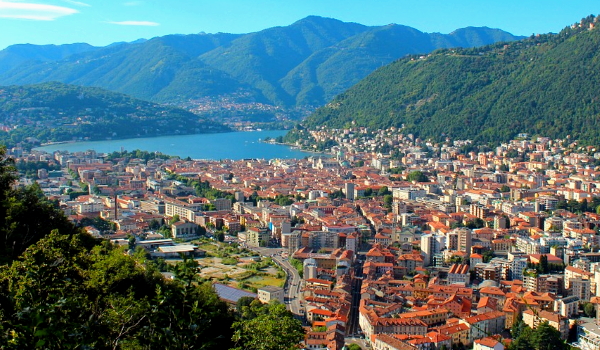
Como lies at the foot of the Alps, only 200 metres above sea level. The climate is mildly Mediterranean. There are palm and citrus trees in the area.
Orientation Como
From our point of view, the centre of the city is on the shore of Lake Como. This is where the ferries dock. Opposite is a large square called Piazza Cavour, the most famous square in the centre of Como. From here a long pedestrian street leads away from the lake. In and around this car-free street are many shops and cafés. After a few hundred metres, on the left, you will see the Cathedral of Como, whose long official name is: Cattedrale di Santa Maria Assunta-Duomo di Como. The cathedral is the most famous building in Como, almost all tourists visit the cathedral.

Como’s train station is called “Como S. Giovanni” and is about 500 metres west of the city centre on a small hill. It takes 5 minutes by train from Como to Chiasso in Switzerland, the hourly regional trains to Milan take about 45 minutes. There is also a suburban train to Milan, this stops at every station and takes over 1 hour.
Places of interest Como
The city has a beautiful old town. Besides the cathedral, there are many other houses worth seeing. Not to be missed in the city centre is the former courthouse Palazzo del Broletto. The Como Silk Museum is worth a visit. Silk has been an important industry in the region for more than 500 years.
You can often get to the central and northern parts of Lake Como by ferry from Como. Como lies directly on one of the two southern tips of the long lake. Most tourists travel by boat to Bellagio or Varenna (journey time 1-2 hours).
Our tip: Day trips to Lake Como
Very many holidaymakers take a trip to Lake Como, especially from Milan. There are several providers. Below are some recommendable day tours with very good reviews from participants:
>>> Very good tour from Milan to Lake Como: Compare Lake Como day trips from Milan For Bellagio and Varenna, choose an itinerary explicitly including both; cruises and stops vary.
>>> Great tour from Milan to Lake Como and Lugano (Switzerland): Compare Lake Como and Lugano excursions from Milan Choose an itinerary explicitly including Lugano in Switzerland and check travel-document requirements.
>>> Alternative Lake Como excursions: Browse alternative Lake Como excursions at Tiqets This is a day-trip selection from Milan, not a confirmed e-bike tour.
Excursions from Como
There are also buses to Bellagio (only a few euros). The ferry, on the other hand, costs 14.50 one-way (express boats). You can take the ferry on Lake Como in one direction and the cheap bus in the other. There is no bus from Varenna to Como. We took the train from Varenna to Monza and then another regional train to Como. Monza is also worth seeing (for 1-2 hours). Our suggestion: In the morning by ferry on Lake Como from Como to Bellagio. 1-2 hours later by car ferry to Varenna. Then by train to Monza, 2 hours to see Monza. In the late afternoon by train back to Como. All tickets together just under 30 euros, you see a lot in one day.
Other day trips are by train to Milan or to Switzerland, for example to Lugano.
Game of Thrones Tours Dubrovnik
Find accommodation in Como
Italy – Records & Extremes
How to plan a visit to Como
Como works well as both a city break and a starting point for exploring the lake. The historic centre is compact enough to see on foot, while the railway station, lakefront and funicular provide easy ways to continue farther. If you arrive by train, check whether your service uses Como San Giovanni or Como Lago: the stations are in different parts of town, and the right one depends on your route. Como San Giovanni is on the main railway corridor, while Como Lago is close to the waterfront and serves trains from Milan’s Cadorna station.
For a short visit, allow at least half a day for the cathedral, old streets, waterfront and a meal. A full day gives you time to add the funicular to Brunate or a boat trip. If you want to visit several lake towns, staying overnight avoids having to fit all the travel into a single day. The atmosphere changes considerably after day visitors leave: the evening promenade and restaurant streets can feel more local and relaxed than the busy midday waterfront.
Como Cathedral and the historic centre
The Cathedral of Santa Maria Assunta is the most prominent building in central Como. Its façade combines several architectural periods, reflecting a building project that continued over centuries. The interior is worth seeing even if you are not planning a long church visit; look for the side chapels, tapestries and the relationship between the Gothic structure and later Renaissance decoration. Dress respectfully and check access conditions during services. The cathedral stands beside the Broletto, the former medieval town hall, and the two buildings make a useful starting point for a walk through the centre.
From Piazza Duomo, follow the pedestrian streets towards Piazza San Fedele. This square has long been a centre of civic life and is surrounded by historic buildings and cafés. The Basilica of San Fedele has Romanesque origins and an interior that reflects later alterations. Nearby streets are a good place to browse small shops, pause for coffee or find a quieter restaurant away from the busiest lakefront. Como’s old centre is mostly level, although paving can be uneven in places.
Lakefront, Villa Olmo and Brunate
The lakeside promenade is one of the simplest pleasures in Como. Walk west from the centre to reach the gardens and neoclassical Villa Olmo. The villa has hosted exhibitions and events, but access to the interior and gardens can vary with the programme, so check the city’s current information before making a special trip. Even when the building is not open, the walk along the water and the view back towards the city are worthwhile. Continue along the shore for a longer, low-effort walk with benches and open views.
The funicular connects Como with Brunate, a hillside settlement above the city. The ride is short, but queues can build at popular times and the service can be affected by maintenance or weather. From Brunate, viewpoints and walking routes offer a wider panorama over the lake and surrounding hills. The paths are not all easy: check distance, gradient and surface before setting off, especially if travelling with children or anyone who has difficulty walking. For a simple outing, take the funicular up, enjoy the village and return the same way.
Using boats and trains
Boat travel is part of the experience, but do not assume every route runs frequently throughout the day. Services differ by season and some journeys take much longer than a train or bus. Before boarding, check the destination, intermediate stops, final departure and whether the boat is a fast service or a slower local boat. The official Navigazione Laghi Lake Como timetable is the best place to confirm current services. Timetables change, and weather or operational notices may affect departures.
Trains are particularly useful for reaching Varenna, Lecco and Milan. If you plan a lake circuit using boats and trains, check how the stations and piers connect in each town. Keep a flexible return option rather than relying on the final boat of the day. In peak season, popular ferries can fill or develop queues. Arriving early and buying tickets from official channels can make the day less stressful.
Food, seasons and practical advice
Como’s food reflects both Lombardy and its lakeside setting. Menus may include risotto, polenta, freshwater fish and regional cheeses, alongside familiar Italian dishes. Restaurants on the main squares and waterfront are convenient, while streets a few blocks back often have more choice at different price points. For lunch, look for a daily menu; for dinner in summer or on weekends, booking a table is sensible. As in any destination, check the menu and prices before sitting down if they are not displayed clearly.
Spring and early autumn are often comfortable for walking and sightseeing. Summer brings longer days and more frequent boat services, but also more visitors and higher accommodation demand. Winter is quieter and can be atmospheric, though some lake services and attractions operate on reduced schedules. Rain can obscure the mountain views, so plan an indoor alternative such as the cathedral, museums or a relaxed meal. Comfortable shoes are useful because the old streets have stone paving and a day combining the waterfront with Brunate can involve more walking than expected.
Suggested itineraries
With half a day, see the cathedral and old centre, then walk along the lakefront. With one full day, add Villa Olmo or the funicular to Brunate, depending on weather and mobility. With two days, use one day for Como itself and the next for a single ferry destination such as Varenna or Bellagio. This leaves room to enjoy the scenery instead of spending the whole visit watching the clock. Families may prefer a shorter boat journey and a playground or lakeside break; visitors interested in architecture can spend longer in the historic centre.
Como is also a practical base for a trip that includes Milan. The train journey is straightforward, but check the station and route when choosing accommodation. If your main aim is to explore the central lake by boat, Varenna or another village may reduce transfer time. Compare transport, hotel location and the number of nights rather than choosing a base only by its name. Our guides to Lake Como, Bellagio and Varenna help compare the main stops.
Access, families and rainy-day alternatives
Como is a manageable destination for families because the central sights, lakefront and cafés are close together. A boat ride can turn a transfer into an activity, while the funicular provides a memorable change of perspective. Check the funicular’s operating status and accessibility before setting out. Strollers can be inconvenient on older streets and uphill routes, so a lightweight pushchair or carrier may be easier. Keep the day flexible around meal times and weather rather than promising several distant stops.
On a rainy day, focus on the cathedral, the historic centre’s covered arcades and any museum or exhibition that is open. Do not count on a particular villa or museum being open without checking its current schedule. A wet day can also be a good reason to take a longer lunch and return to the waterfront when the rain clears. Views from Brunate are weather-dependent, so save the funicular for a clearer period if your stay allows.
Visitors who want a quieter experience can walk beyond the busiest central stretch of the promenade or explore residential streets in daylight. Como is a living city rather than a resort designed only for visitors; use pedestrian crossings, keep noise down near homes and follow local signs. If travelling onward, allow time to collect luggage and reach the correct station. The distinction between Como San Giovanni and Como Lago matters when you are catching a train, and a few extra minutes can prevent an avoidable dash.
Before you leave
Save the address of your accommodation and the station or pier you need for the return journey. If you are visiting from Milan, confirm the last train and identify which Como station it leaves from. If travelling by boat, keep the operator’s timetable accessible offline in case mobile reception is weak. Carry a light layer even in summer, since breezes on the water can feel cooler than the streets. These small preparations leave more time to enjoy the lake rather than solve logistics at the last minute.
Tickets and experiences near Como