 Posted by
 Parking in Florence can feel confusing if you are visiting from the United States, Canada, the UK, Australia or another country where downtown driving rules are easier to understand. Florence is one of the most beautiful cities in Italy, but it is not a city that welcomes cars in the historic center. Streets are narrow, traffic is restricted, public parking is limited, and one wrong turn can lead to an expensive fine weeks or months later.
>>> On this great website you can reserve parking spaces in Florence
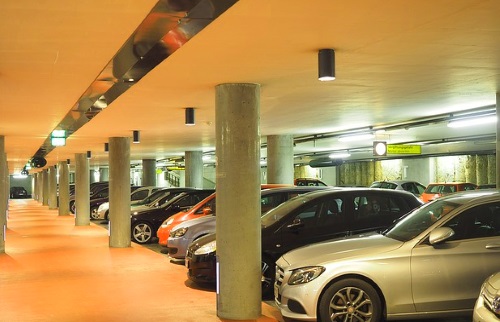
That does not mean you should never drive to Florence. It simply means you need a plan before you arrive. If you understand the restricted traffic zone, the colors of parking spaces, the difference between garages inside and outside the center, and how Italian toll roads work, driving to Florence becomes much easier and less stressful.
This guide is written especially for tourists with little experience driving in Italy. It explains where to park, what the blue, white and yellow parking lines mean, whether Florence has a toll, how the ZTL works, what to avoid, and why many visitors are better off reserving a parking spot in advance rather than searching on the street. Florence’s historic center is heavily protected by ZTL rules and camera controls, and on-street parking is limited and regulated. Private garages and pre-booked parking are often the safest option for visitors.
Compare and reserve parking in Florence here
Why parking in Florence is more difficult than many tourists expect
Many first-time visitors imagine Florence as a normal European city where they can drive into the center, find a garage near the cathedral and continue on foot. In practice, Florence is very different. The old center is compact, full of one-way streets, monitored by cameras and covered by a ZTL, which is the Italian abbreviation for “Zona a Traffico Limitato” or limited traffic zone. Much of the area tourists most want to visit is inside or very close to this restricted zone.
Another issue is that Florence is a walking city. The center was not designed for modern traffic, especially not for large rental cars or visitors unfamiliar with Italian signs. Even if you technically find a road that leads near the Duomo, Piazza della Signoria or Ponte Vecchio, parking on the street will usually be difficult, expensive, restricted or impossible. That is why tourists who arrive by car often do best with one of two strategies: park outside the most sensitive central area and walk or use public transport, or reserve a private garage that is used to dealing with visitors. Florence has paid street parking, resident-only spaces, disabled spaces and a broad ZTL system that covers most of the historic center.
What does ZTL mean in Florence?
If you are new to Italy, the most important term to learn is ZTL. In Florence, the ZTL protects the historic center from unrestricted traffic. Entry points are monitored by cameras. If your vehicle enters without authorization during active hours, the system records your license plate and a fine may follow. This applies not only to local drivers but also to tourists and rental cars. European consumer information sources warn that unauthorized ZTL entry in Italy can lead to fines of around 100 euros per entry, and rental cars do not protect you from enforcement.
For travelers from the US, it helps to think of the ZTL as something between a restricted downtown zone and an automated camera-controlled permit area. The difference is that in many Italian cities, including Florence, the system is easy to enter by mistake if you just follow Google Maps or drive without checking access rules first.
In Florence, there are central areas with permanent or time-based restrictions, and there are also seasonal nighttime restrictions in some sectors. If you are staying in a hotel inside the ZTL, the hotel may sometimes register your plate, but you should never assume this happens automatically. Ask before you drive in. If you are using a private garage inside the zone, the garage may also help with registration, but again this must be confirmed in advance. The Parclick listing for Garage Sant’Orsola, for example, specifically notes that it is in the historic center and mentions Florence’s LTZ/ZTL situation, while some other garages such as Garage Petrarca and Quick Novoli San Donato are explicitly outside the ZTL and therefore easier for nervous drivers.
Does Florence have a city toll?
This is one of the questions tourists ask most often, especially Americans who have driven in places with bridge tolls, express lanes or congestion charges. The short answer is: Florence does not have a normal city toll in the same way that some cities have congestion pricing for entering downtown. The bigger risk in Florence is not a city toll but the ZTL. If you enter a restricted zone without permission, that is a traffic violation, not a standard toll payment.
However, many people do pay tolls on the way to Florence. If you drive to Florence on Italian autostrade, the toll motorways, you will normally pay motorway tolls based on the distance travelled and the type of vehicle. Autostrade per l’Italia explains that motorway tolls are calculated from distance, vehicle class and route characteristics, with VAT included and rounded to the nearest 10 euro cents. So there is a difference between motorway tolls outside the city and restricted driving rules inside Florence.
For tourists, the practical answer is simple:
- You may pay a motorway toll while driving to Florence.
- You do not normally pay a standard “Florence city toll” to enter downtown.
- You can still be fined if you drive into the ZTL without authorization.
What do blue, white and yellow parking lines mean in Florence?
This is another essential point, because line colors in Italy matter. In Florence, tourists should pay close attention to the painted lines around parking spaces. Several reliable Florence and Italy parking guides agree on the basic meaning: blue lines are paid public parking, white lines are generally reserved for residents in Florence or are otherwise limited and uncommon near the center, and yellow lines are reserved spaces, usually for disabled permit holders or other authorized users.+
Blue parking lines
Blue lines are the spaces most tourists can legally use. They are paid spaces. Usually you pay at a parking meter nearby or through an app where available. In many parts of Florence, payment hours are typically Monday to Saturday during the day, with Sundays and some holidays treated differently, but always check the sign on the street because local conditions can vary. Several Florence parking guides note daytime payment windows around 8:00 a.m. to 8:00 p.m. from Monday to Saturday. +
White parking lines
Tourists often misunderstand white lines. In some parts of Italy, white can mean free parking. In Florence, however, white-lined spaces are commonly linked to resident parking restrictions or are rare and heavily regulated near central areas. For a visitor, the safest approach is not to assume that white means free. Read the local signs carefully. If you are uncertain, do not use the space.
Yellow parking lines
Yellow lines are not for normal tourist parking. They are generally reserved for disabled permit holders or other specially authorized categories. If you park there without the correct permit, you risk a fine and possibly towing.
How expensive is parking in Florence?
Parking in Florence is not cheap, especially if you want convenience. Parclick states that on-street parking in Florence can cost roughly 1 to 3 euros per hour and that car parks vary in price depending on location and service. Some private garages close to major sights are more expensive but save time and reduce the risk of ZTL mistakes.
In real life, the amount you pay depends on four main factors:
- How close you want to be to the historic center
- Whether you use the street or a private garage
- Whether you stay for a few hours, overnight or several days
- Whether you pre-book online or arrive without a reservation
Tourists with luggage, children or a tight sightseeing schedule often discover that a pre-booked garage is worth the higher price because it eliminates circling around narrow streets. If you stay outside the center and only need a day visit, parking farther out can be cheaper. If your main goal is to visit the cathedral, Piazza della Signoria, Santa Maria Novella or the Accademia, paying more for a garage may still make sense because the city center is difficult for drivers.
Before your trip, it is smart to compare the cost of parking with other Florence travel costs. If you are budgeting your stay, you can also check our guide to prices in Florence.
Street parking vs. garage parking in Florence
Many tourists ask whether they should try to park on the street or go directly to a garage. For most visitors with limited Italian driving experience, garage parking is the safer and more practical option.
Street parking
Street parking can be cheaper, especially on the edges of the center. But it comes with disadvantages:
- Very limited availability near major sights
- Need to understand line colors and signs
- Need to watch payment times and street cleaning schedules
- Higher stress level
- Greater chance of misunderstanding local restrictions
Garage parking
Garage parking is usually easier. It costs more, but it has major advantages:
- Your spot is secured in advance if you pre-book
- Staff often know how to handle tourist arrivals
- Some garages are outside the ZTL
- Covered parking protects the car
- You avoid wandering through Florence’s most confusing streets
On Parclick, Florence garages include central options like Garage Sant’Orsola and more accessible outside-ZTL alternatives such as Garage Petrarca and Quick Novoli San Donato Firenze. Quick Novoli San Donato is presented as a large facility with around 1,500 spaces and outside the ZTL, while Garage Petrarca is also described as outside the ZTL.
See current Florence parking options here
Best strategy for first-time tourists driving in Florence
If you have never driven in Italy before, the best strategy is usually this:
- Do not try to improvise in the historic center.
- Reserve a garage before arrival.
- Choose a garage outside the ZTL if you are nervous about restricted streets.
- Leave the car parked and explore Florence on foot.
Florence is ideal for walking once you are parked. Major sights are close together. For example, after parking you may want to see Florence Cathedral, Ponte Vecchio, Piazza della Signoria, the Uffizi Gallery or Palazzo Vecchio. The city is much more enjoyable when you stop worrying about your car.
Parking near Florence’s main sights
Tourists often choose parking based on their sightseeing plan. Here is a simple breakdown.
Duomo, Accademia and San Lorenzo area
If your main focus is the cathedral area, the Accademia or San Lorenzo, you need to be very careful because you are dealing with one of the most sensitive parts of central Florence. Central garages can make sense here, but only if you are confident about the route or if the garage provides clear arrival instructions. After parking, you can visit the dome of Florence Cathedral, the Accademia, Mercato Centrale and the Cathedral Museum.
Piazza della Signoria, Uffizi and Ponte Vecchio
This is the classic tourist core. It is not the area where beginners should be driving around looking for blue spaces. A garage on the edge of the center or a pre-booked central option is usually better. Nearby attractions include Loggia dei Lanzi, Palazzo Vecchio, the Uffizi and the Bargello.
Oltrarno and Piazzale Michelangelo
If you plan to see the south side of the Arno, you may prefer parking options that avoid the busiest cathedral zone. This can be useful if you want to visit Palazzo Pitti, cross the river on foot and continue to Piazzale Michelangelo for the famous view.
Santa Maria Novella area
This area can be practical for drivers because it gives easier access than some deeper parts of the center. It is also useful if your hotel is near the station. You may combine parking with visits to Santa Maria Novella and nearby museums and markets.
Can tourists park inside the ZTL?
Sometimes yes, but only under specific conditions. This is where confusion causes many fines. The ZTL does not always mean “no car can ever enter.” It means access is controlled. Residents, authorized vehicles, hotels, some garages and certain other categories may have ways to register a plate or manage access. But if you are a normal tourist, you should never assume you have this right automatically. Reliable Florence guidance stresses that hotels or garages may register your plate in some cases, but you must arrange this in advance and follow the correct route.
If you are unsure, choose a parking facility outside the ZTL. This removes most of the stress immediately.
Does Google Maps always understand Florence’s restrictions?
No. This is a major problem for tourists. Navigation apps are useful, but they do not remove the responsibility to obey local rules. A route that appears simple on your phone can still pass a camera-controlled ZTL entry. In Florence, blindly following GPS is one of the easiest ways to get fined. The old center is not a place for guesswork.
A better approach is this:
- Reserve parking first.
- Read the garage’s arrival instructions carefully.
- Check whether the garage is inside or outside the ZTL.
- If inside, confirm how authorization works.
Is there free parking in Florence?
Free parking exists in a limited way, but tourists often overestimate how easy it is to find. The closer you are to the historic center, the less realistic free parking becomes. Several Florence parking guides say free central parking is extremely rare or practically nonexistent for visitors. Some areas farther out, such as certain residential districts or outskirts parking areas, can offer more affordable or free possibilities, but then you need extra time for the walk, bus or tram.
For a tourist with a rental car and luggage, chasing free parking in Florence often saves less money than expected. The hidden cost is time, stress and the possibility of making a mistake with signs or restrictions. Unless your budget is very tight and you are comfortable using local transport, a reserved garage is often the better choice.
How long can you leave your car in Florence?
This depends on where you park. On-street blue spaces may have posted conditions and rates. Some are appropriate for a few hours rather than several days. Private garages are usually much better for overnight stays, multi-day trips or travelers who want to leave the car and explore Tuscany by train for a while.
Parclick explicitly offers both short-term and longer stays in Florence, including garages designed for day visits, overnight parking and airport-related uses. For example, Auto Firenze Parking is positioned for Florence Peretola airport and is open 24/7, while various city garages are designed for central sightseeing stays.
Parking at Florence airport vs. parking in the city
Some tourists confuse the two because they arrive in Florence, pick up a car and then continue into Tuscany. Airport parking and city parking are different products. If you need parking while flying, airport lots are more relevant. If you are sightseeing in central Florence, you want city parking, not airport parking.
If your itinerary includes only Florence city sightseeing, do not drive to the airport just because parking seems easier there. You would only create more transfers and wasted time. City parking is the correct solution for city sightseeing. Airport parking makes sense only if you are flying in or out and leaving the vehicle during that process.
What happens if you enter the ZTL by mistake?
Unfortunately, this happens often. If the camera records your plate and you are not authorized, the fine can be processed later. Tourists sometimes receive notices long after the trip, especially with rental cars. Consumer authorities in Europe warn that every unauthorized entry can count separately, which means several mistakes can mean several fines.
If you think you entered by mistake, do not assume nothing happened just because there was no police stop. ZTL enforcement is largely automated. This is why pre-planning matters so much in Florence.
Should Americans rent a car before or after visiting Florence?
For many American tourists, the smarter choice is to visit Florence first without a car, then pick up the car after the city stay. Florence is one of the least useful places in Tuscany to have a car while you are actually visiting museums and walking through the old center. A car becomes more valuable after Florence, when you head into Tuscany’s countryside, hill towns and smaller places.
If that fits your itinerary, you may want to spend a few days exploring central sights first, such as the main sights in Florence, Florence museums and Florence churches, and only then collect a vehicle for day trips to Fiesole, Siena, Lucca or other destinations in Tuscany.
When it makes sense to drive to Florence anyway
Driving to Florence can still make sense in several situations:
- You are on a larger Tuscany road trip.
- Your hotel outside the center includes parking.
- You are visiting for only a short stop.
- You have mobility needs that make car access important.
- You are combining Florence with regional destinations such as Siena, Pisa, Lucca or the Tuscan coast.
If your trip continues after Florence, useful related pages on our site include Tuscany cities, the Leaning Tower of Pisa, Lucca’s walls and Siena Cathedral.
Practical parking tips for Florence
- Do not drive into the center without knowing your exact parking destination.
- Do not assume white lines are free tourist parking.
- Use blue spaces only if the local signs clearly allow it and you understand the payment rules.
- Avoid yellow spaces unless you have the correct permit.
- If you are anxious about ZTL fines, choose a garage outside the ZTL.
- Reserve ahead during weekends, holidays and high season.
- If a hotel claims it can register your plate, ask for exact instructions in writing.
- Check whether you need to hand over your keys at the garage. Some central garages require this. Parclick’s Florence listings note this in some cases.
>>> On this great website you can reserve parking spaces in Florence
Is online booking worth it in Florence?
For most tourists, yes. Online booking is not just about saving money. It is about reducing uncertainty. Parclick markets advance booking as a way to secure a guaranteed place and often save compared with official or last-minute prices. In a city like Florence, where parking is genuinely stressful and the cost of mistakes is high, that can be more valuable than the price difference alone.
Pre-booking is particularly useful for:
- Families with children
- Travelers with a lot of luggage
- First-time Italy drivers
- People arriving on weekends
- Visitors staying overnight in or near the center
Reserve Florence parking in advance here
Final thoughts: should tourists drive into Florence?
Florence is not impossible by car, but it is one of those cities where simple mistakes become expensive. If you have little experience with Italian urban driving, the safest message is this: do not treat Florence like a suburban American city. The center is restricted, parking line colors matter, signs matter, and the ZTL matters even more.
The good news is that with a little planning, Florence is manageable. Understand that blue parking is paid, white is not automatically for tourists, yellow is reserved, motorway tolls are separate from city driving rules, and the ZTL is the real danger. If you park smartly and then explore on foot, Florence becomes much more enjoyable.
Once your car is parked, you can focus on what really matters: the cathedral, the Uffizi, Ponte Vecchio, Piazza della Signoria, Mercato Centrale, Santa Croce and the view from Piazzale Michelangelo. For many travelers, that is exactly why reserving parking first is the best decision.
If you are also planning other Italian city stops, you may find these pages useful as well: Parking in Milan, Parking in Rome, Parking in Trieste and Parking in Venice.
FAQ about parking in Florence
Is it difficult to park in Florence?
Yes. Florence is one of the more difficult Italian cities for inexperienced drivers because the historic center is covered by a ZTL, central streets are narrow and legal parking is limited.
What do blue parking lines mean in Florence?
Blue lines usually indicate paid public parking. Always check the sign nearby for hours, prices and restrictions.
Are white parking spaces free in Florence?
Do not assume that. In Florence, white-lined spaces are commonly associated with residents or local restrictions, especially near central areas. Read the posted sign carefully.
What do yellow parking lines mean?
Yellow spaces are reserved, usually for disabled permit holders or other authorized vehicles. Tourists should not park there without the proper permit.
Does Florence have a congestion toll?
Not in the normal sense. The larger issue is the ZTL, not a standard city toll. But you may pay motorway tolls when driving to Florence on Italian autostrade.
Can I drive into the historic center of Florence?
Only with caution. The center is covered by ZTL restrictions and camera enforcement. Do not enter unless you know you are authorized or have a confirmed arrangement with a hotel or garage.
What is the safest option for tourists?
For most tourists, the safest option is reserving a garage in advance, ideally one outside the ZTL if you are worried about fines and confusing access routes.
Is pre-booking Florence parking worth it?
Usually yes, especially for first-time visitors, families and anyone arriving on weekends or in high season. It reduces stress and lowers the chance of ZTL mistakes.
| Our pages about Parking in Italy | |
|---|---|
| Parking in Rome | Fusina Parking (Venice) |
| Parking in Trieste | Parking in Milan |