Bologna: a practical city guide
Bologna is the capital of Emilia-Romagna and one of northern Italy’s most rewarding cities for a short break. Its historic centre is known for long covered arcades, medieval towers, university buildings, churches and a strong food culture. The main sights are concentrated enough for walking, while the city’s railway station makes it a convenient stop between Milan, Florence, Venice and other destinations.
This guide covers the main places to see, realistic walking routes, local food, transport and where to stay. It also corrects an important detail for current visitors: the Asinelli Tower and Garisenda Tower are currently closed or inaccessible, so do not plan on climbing them. Bologna Welcome suggests the Clock Tower as an alternative viewpoint and publishes current tower information. Check the latest Two Towers visitor update.
At a glance: Allow one full day for the historic centre and two days if you want to visit museums, the university district and nearby areas. Bologna is a good city to explore on foot, and its porticoes provide shelter in rain or sun. The local pasta tradition is based on dishes such as tagliatelle al ragù and tortellini, rather than the international “spaghetti Bolognese” version.
Why visit Bologna?
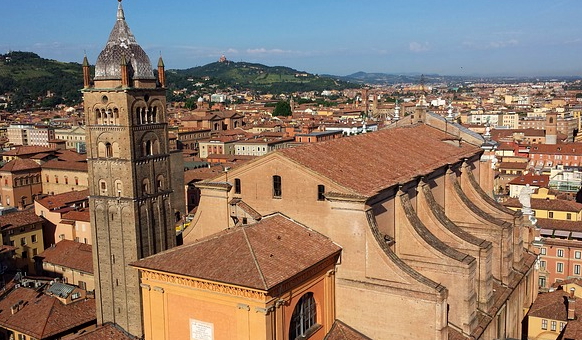
Bologna has a distinctive mix of university life, civic history and everyday food culture. The city’s porticoes connect streets and squares, and their architecture changes from one neighbourhood to another. The historic centre is lively without requiring visitors to travel far between major sights. It is also a useful base for regional rail journeys to Modena, Parma, Ferrara and other cities in Emilia-Romagna.
The city is sometimes called “La Dotta, La Grassa, La Rossa”: the learned, the rich in food and the red. These nicknames refer respectively to the university, cuisine and characteristic terracotta-coloured architecture. They are shorthand rather than a complete description, but they help explain why visitors often combine cultural sightseeing with meals and market visits.
Main sights in Bologna
Piazza Maggiore
Piazza Maggiore is the central square and a good starting point for a first walk. It is surrounded by major civic and religious buildings, including the Basilica of San Petronio, Palazzo d’Accursio, Palazzo del Podestà and Palazzo dei Banchi. The square developed from the thirteenth century as the municipality acquired land and buildings to create a civic and commercial centre. Bologna Welcome describes it as the heart of the city. Read the official Piazza Maggiore visitor information.
Take time to notice the different façades and the everyday use of the square. It is not only a monumental backdrop: residents meet here, events are held here, and the surrounding streets lead into the main shopping and food districts.
Basilica of San Petronio
San Petronio dominates one side of Piazza Maggiore. Its unfinished façade is a striking feature, with marble decoration on the lower portion and exposed brick above. The large interior contains chapels, artworks and the meridian line designed by astronomer Giovanni Domenico Cassini. Visitors should check current opening rules and any restrictions during religious services. Dress respectfully, and do not assume photography is allowed everywhere.
Neptune’s Fountain
The Fountain of Neptune stands in Piazza del Nettuno, next to Piazza Maggiore. Created in the sixteenth century by Giambologna and Tommaso Laureti, it is one of Bologna’s best-known civic landmarks. The fountain is a convenient meeting point and a short walk from the main square. Respect barriers and signs, and do not climb onto the monument.
The Two Towers
Bologna’s medieval towers once numbered many more than the two best-known examples. The Asinelli and Garisenda towers are close to Piazza Maggiore and remain powerful symbols of the city. The Asinelli tower was built in the early twelfth century and is almost 100 metres tall. The Garisenda is shorter and visibly leans. However, current maintenance and safety work means the towers are closed to public access; the Garisenda is not accessible. Check Bologna Welcome before travelling because status may change.
The city’s Clock Tower at Palazzo d’Accursio is a current alternative for a view over the rooftops, subject to its own booking and opening arrangements. Do not rely on older guides that say visitors can climb Asinelli’s 498 steps. Our article on the Leaning Tower of Pisa provides another comparison of famous leaning landmarks.
Bologna’s porticoes
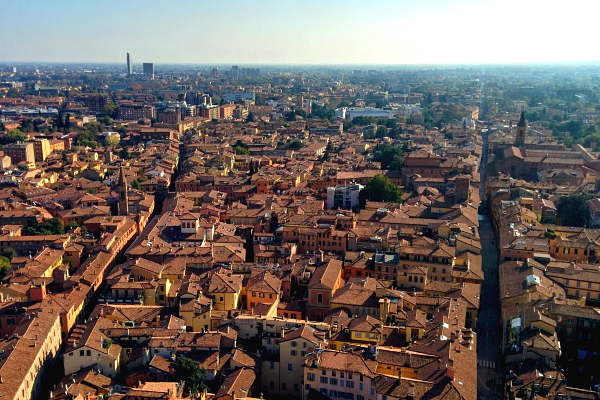
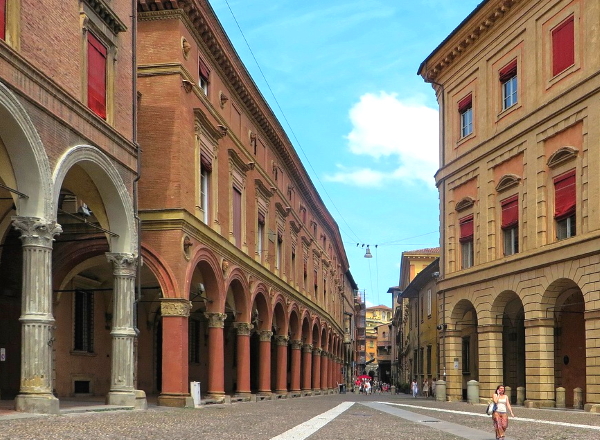
The porticoes are among the city’s most important features. They provide covered walkways along streets, connect buildings and make walking in rain or strong sun more comfortable. Their styles range from medieval timber arcades to stone, brick and later structures. UNESCO inscribed the Porticoes of Bologna as a World Heritage property in 2021; the listed property includes twelve groups that represent parts of the wider network, which stretches across the city. Explore the UNESCO description of Bologna’s porticoes.
You do not need to follow a single route to appreciate them. Walk from Piazza Maggiore towards the university district, along Via Zamboni, or under the porticoes leading to the Sanctuary of San Luca. The San Luca route is a long uphill walk with many arcades; check distance and weather before setting out. If you prefer a shorter visit, explore the central porticoes around Piazza Maggiore and the Archiginnasio.
Archiginnasio and the university
Bologna’s university tradition is central to the city’s identity. The Archiginnasio was built in the sixteenth century as a university seat and now houses the municipal library and the Anatomical Theatre. Its courtyard and walls are decorated with coats of arms. The Anatomical Theatre and some rooms require a ticket or booking; opening details may depend on institutional events. Bologna Welcome provides current visitor information. Check the Archiginnasio visitor details.
The broader university area is lively and full of cafés, bookshops and student spaces. It is a good place to see a more everyday side of Bologna beyond the principal monuments.
Quadrilatero and markets
The Quadrilatero is a historic market district near Piazza Maggiore. Its narrow streets contain food shops, bakeries, delicatessens, cafés and restaurants. It is a good area to browse local ingredients and have a meal, though it can be busy at lunchtime and in the evening. A visit is about atmosphere as much as a formal attraction.
When buying food, ask about ingredients and whether a product is intended to be eaten on site or taken away. Market hours and stall activity vary, and some shops close at different times. Do not assume every food stall is a traditional producer; check the setting and ask questions if you are looking for a specific local product.
What to eat in Bologna
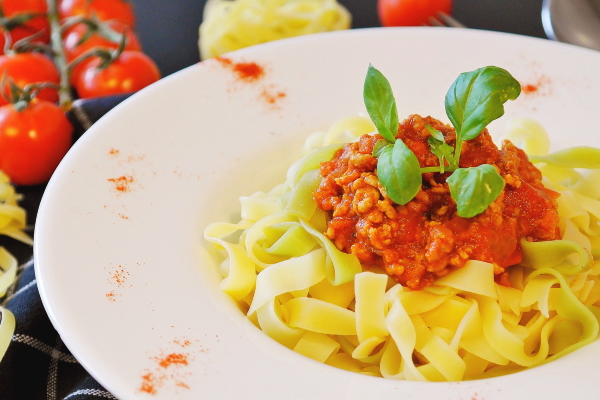
Bologna is associated with fresh pasta and rich sauces. Tagliatelle al ragù is a classic local dish; tortellini are often served in broth; lasagne and mortadella are also well-known. “Spaghetti Bolognese” is an international dish name, but it is not the usual way the local ragù is served in Bologna. The official tourism site describes the local registered tagliatelle recipe and typical products. Read about tagliatelle al ragù.
For a meal, look for a trattoria or osteria and check the menu before sitting down. Traditional dishes can be filling and may contain meat, dairy or eggs. Vegetarian and vegan choices are available but should be confirmed in advance, especially for handmade pasta and sauces. Markets and bakeries make it easier to sample smaller items if you do not want a full restaurant meal.
Suggested one-day itinerary
Begin at Piazza Maggiore and see San Petronio, Neptune’s Fountain and the surrounding civic palaces. Continue to the Quadrilatero for a coffee or light lunch. In the afternoon, visit the Archiginnasio and walk through the university district. Finish with the Two Towers from street level and a dinner of local pasta. If the Clock Tower viewpoint is open and you have booked a time, include it in place of climbing the currently closed Asinelli Tower.
This route leaves room for a museum or longer meal, but not every interior. If you want to visit several museums, split the itinerary over two days. The city is more enjoyable when you leave time to walk beneath the porticoes and explore side streets.
Two days in Bologna
With a second day, add the Sanctuary of San Luca, the National Gallery or a food market visit. San Luca sits outside the immediate centre, so check transport options and allow for the walk if you plan to follow the porticoed route. The National Gallery of Bologna has a substantial collection and deserves time if you enjoy art. Check current opening days and ticket information before going.
You can also make Bologna a base for a day trip by train. Modena, Parma and Ferrara each offer a different historical and culinary experience. Confirm the rail route and return schedule, particularly if you are travelling on a Sunday or public holiday.
Getting to Bologna
Bologna is one of Italy’s main railway hubs, with high-speed and regional trains connecting it to cities including Milan, Florence, Venice, Rome and Verona. Journey times, train types and fares vary. Book high-speed trains in advance if you want a particular departure or lower fare, and check which Bologna station entrance is closest to your accommodation.
Bologna Guglielmo Marconi Airport is located north-west of the city. A people mover and other transport links connect the airport with the central station area; service names, schedules and ticket arrangements can change, so check the airport and operator information before travel. Taxis are another option. If you arrive late, verify the last public transport departure and have the accommodation address ready.
Getting around Bologna
The historic centre is compact and best explored on foot. The porticoes provide shelter, but they do not eliminate steps, uneven paving or crowds. Buses serve longer routes, and the railway station is a manageable walk from the central area for many visitors. Driving inside the centre is inconvenient because of restricted traffic zones and limited parking.
If you arrive by car, choose accommodation with confirmed parking outside or near the restricted zone and use public transport or walk into the centre. Do not follow a navigation app into a limited-traffic area without checking the signs and access rules. For a day trip, Bologna station is often more convenient than parking in the historic core.
Where to stay in Bologna
Staying in the historic centre makes it easy to reach the main sights, restaurants and porticoes on foot. The area around the railway station is practical for early trains and day trips, but compare the exact walking route and street atmosphere. Accommodation near the university district may be lively at night. Check recent guest reviews, noise information, air conditioning and cancellation terms.
Compare accommodation in Bologna
Choose a location that fits your sightseeing and train plans, and check noise, parking and check-in details before booking.
When to visit Bologna
Spring and autumn are comfortable periods for walking and city sightseeing, though weather can change. Summer can be hot, and the centre becomes busy during major events and holiday periods. The porticoes provide shade and shelter, but longer routes still require water and breaks. Winter is quieter but can be damp or cold, and shorter daylight hours make early starts useful.
Check event dates if you want to attend a fair, concert or food festival, as these can affect room availability and prices. For a quieter city break, avoid major event weekends where possible. Museums and restaurants may use seasonal or holiday schedules.
Guided tours and food experiences
A guided walk can help explain the history of the university, the porticoes and medieval towers. Food tours can be useful for visitors who want to understand local ingredients and regional traditions, but compare group size, duration, food inclusions and the meeting point. A listing may say “tasting” without specifying how much food or drink is included, so read the offer details.
Compare Bologna tours and experiences
Check the route, language, group size and food or ticket inclusions before choosing a guided visit.
Practical tips for visiting Bologna
- Wear comfortable shoes for cobbles and long walks under the porticoes.
- Check the current status of the Asinelli and Garisenda towers; they are closed or inaccessible at present.
- Reserve the Anatomical Theatre or other timed attractions where required.
- Use the porticoes for shelter, but remember that they can still be crowded during rain or heat.
- Check restaurant menus and prices, especially around the main squares.
- Use Bologna as a rail base for nearby cities, but check return services before a day trip.
- Avoid driving into the centre without understanding the ZTL access restrictions.
Is Bologna worth visiting?
Bologna is worth visiting for its architecture, university history, food and walkable centre. It works well as a one- or two-day city break and as a transport hub for Emilia-Romagna. The closed towers mean one famous activity is not currently available, but the city still offers plenty to see: Piazza Maggiore, the porticoes, the Archiginnasio, churches, markets and museums.
For more regional ideas, read our Emilia-Romagna overview. Nearby destinations such as Parma, Modena and Ferrara can also be explored by train; check current rail connections and timetables before planning a day trip.