Ponte Vecchio in Florence: History and Visitor Guide
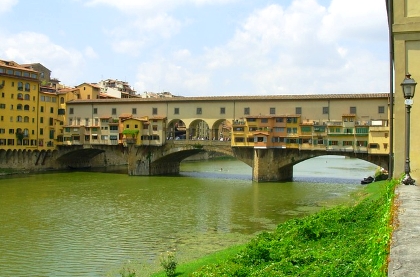
Ponte Vecchio is the best-known bridge in Florence and one of the city’s most recognisable landmarks. It crosses the Arno between the historic centre and the Oltrarno, with small buildings and jewellery shops lining its sides. The bridge is still a public route across the river, but it is also a place to pause for views, notice medieval architecture and understand how the Medici connected their residence to the political centre of Florence.
Walking across the bridge is free and does not require a ticket. It can be crossed at any time, although shops keep their own opening hours and the central viewing area can become crowded. The elevated Vasari Corridor runs above the shops, but access to that route is separate and requires a reservation through the Uffizi Galleries. This guide explains what you can see from the bridge itself and how to include it in a practical Florence itinerary.
Stay in Florence
A central base makes it easy to visit the bridge early or return in the evening. Compare locations and dates for accommodation near the Arno and historic centre.
Where is Ponte Vecchio?
The bridge is in Florence’s historic centre, crossing the Arno between Via Por Santa Maria and Via de’ Guicciardini. On the northern side, it is close to the Uffizi Gallery, Piazza della Signoria and the riverfront streets. On the southern side, it leads directly into Oltrarno, with Palazzo Pitti and the Boboli Gardens a short walk beyond it. The crossing is easy to add to a walking route through central Florence.
From the Duomo, follow Via Roma and continue toward Piazza della Signoria, the Uffizi and the river. From Santa Maria Novella station, it is a walk of roughly 20 to 25 minutes depending on your route. Florence’s historic centre is largely pedestrian, and walking is often more straightforward than trying to reach the bridge by car. The central streets are subject to traffic restrictions, so drivers should use a car park outside the restricted area.
A bridge built after repeated floods
There has been a crossing near this point since Roman times, when the settlement of Florentia stood on the Arno. Earlier bridges were damaged or destroyed by floods. After the devastating flood of 1333, Florence decided to build a stronger stone bridge. The present Ponte Vecchio was completed in 1345, probably to a design by Taddeo Gaddi, although the precise authorship is not certain.
The bridge is notable for its three broad segmental arches and for the shops built along both sides. Rather than a simple road deck with buildings added nearby, the shops form part of the bridge’s distinctive appearance. Over time, the structures above and beside the crossing were modified, but the bridge still follows its medieval route across the river.
Why are there jewellery shops on the bridge?
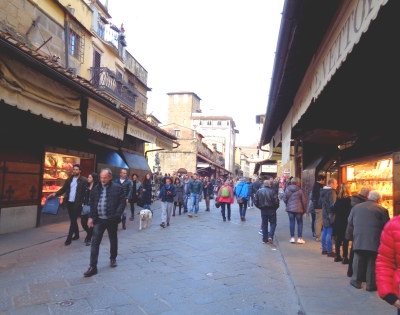
For centuries, the bridge was a place of trade. Butchers, fishmongers and tanners once had shops here. In 1593, Grand Duke Ferdinando I ordered the old trades to leave and allowed goldsmiths and jewellers to take their place. The change was associated with the new Vasari Corridor above the bridge: the Medici wanted to avoid unpleasant smells along their private elevated route.
Jewellery workshops and shops remain part of the bridge today. Window displays range from simple pieces to high-value gold and precious stones. Browsing is free, but prices can be substantial, so treat this as a historic shopping street rather than a market with bargain prices. If you intend to buy, compare materials, workmanship, certificates and shop policies, and take time to understand the item before making a decision.
The Vasari Corridor above the shops
The Vasari Corridor is an enclosed passage commissioned by Cosimo I de’ Medici in 1565 and designed by Giorgio Vasari. It linked the Medici residence at Palazzo Pitti with Palazzo Vecchio and the Uffizi, allowing the family to travel between home and government buildings without walking through the crowded streets. The route crosses the Arno over Ponte Vecchio and continues through buildings and over streets toward the Oltrarno.
The corridor is not the same thing as the bridge and cannot be entered simply by walking up from the public crossing. It is managed by the Uffizi Galleries and requires a dedicated ticket and advance reservation. Access conditions, route and availability can change, so consult the official Uffizi site if you want to visit. From below, you can see the line of the enclosed passage above the shops, but the interior is not part of a standard Ponte Vecchio walk.
What to see while crossing
Walk slowly through the centre and look for the open areas where the shopfronts give way to views over the Arno. These gaps are popular photo stops and can become congested. Pause to let other pedestrians pass, and avoid stopping in the narrowest sections. From the bridge, you can look toward other historic crossings and the buildings along both banks.
In the middle of the bridge is a monument to the goldsmith and sculptor Benvenuto Cellini, created by Raffaello Romanelli and unveiled in 1900. Nearby, notice the sundial and the changing character of the façades. The bridge is an active commercial place as well as a monument, so shopkeepers, residents and other visitors share the space.
Views from the Arno riverbanks
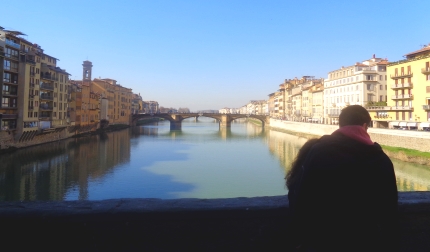
For a broader view of Ponte Vecchio, walk along the riverbank rather than relying only on photographs from the bridge. The Lungarno paths and nearby bridges provide angles that show the layered shopfronts and the Vasari Corridor above them. Sunset can bring attractive light across the river, but it is also a busy time for photographers and walking tours.
Crossing a neighbouring bridge is another way to appreciate the structure from a little distance. Ponte Santa Trinita, to the west, is particularly convenient for a loop between the Uffizi area and Oltrarno. The view changes with water level, weather and time of day. Keep to pedestrian areas along the river and follow any temporary restrictions or maintenance signs.
Explore Florence sights
Browse current Florence attraction tickets and activities. Check the listing for exact inclusions, dates, language and meeting point before booking.
Does Ponte Vecchio have an entrance fee?
No. Ponte Vecchio is a public bridge and pedestrians can cross it without buying a ticket. You do not need a time slot. Entry fees apply only to separate attractions, such as the Uffizi or the Vasari Corridor. Shops and businesses on the bridge set their own opening hours and commercial terms.
Best time to visit
Early morning is usually the calmest time to walk across and take photographs. During the day, tour groups and shoppers create a steady flow, while sunset and early evening are popular for views over the river. If you dislike crowds, cross at a quieter hour and return to the riverbank later for photographs.
The bridge is open throughout the year, but weather affects the experience. In summer, the stone and crowded streets can feel hot, so carry water and take breaks in shaded areas. During heavy rain or high water, follow official notices and avoid restricted riverbank sections.
Accessibility and practical advice
The official Florence tourism listing marks the bridge as accessible. The historic paving and busy pedestrian flow may still make progress slower for visitors using a wheelchair, cane or mobility aid. Individual shop entrances can have thresholds and limited interior space. If you need a quieter crossing, consider visiting early and allow extra time.
Keep bags close in crowded areas and be aware of bicycles, delivery vehicles or service activity where permitted. Do not lean over railings or climb onto historic structures for photographs. There are no ticket gates or visitor facilities on the bridge itself; cafés, toilets and museums are located in the surrounding streets and attractions.
How to combine Ponte Vecchio with nearby sights
A classic route begins at the Duomo, continues past Piazza della Signoria and the Uffizi, crosses Ponte Vecchio and ends at Palazzo Pitti. You can then explore the Boboli Gardens or walk through the Oltrarno toward Santo Spirito. The reverse route works well if you want to finish near the river or the Uffizi. See our guides to Palazzo Pitti, the Uffizi Gallery, Florence Cathedral and gelato in Florence.
If you are planning a longer walk, use the bridge as one of several Arno crossings. Start on the northern bank, cross at Ponte Vecchio, continue to Piazza Pitti, and return via Ponte Santa Trinita or Ponte alle Grazie. This gives you different river views without retracing the same streets.
A closer look at the bridge’s design
The bridge is not a straight, uninterrupted row of shopfronts. Its central opening creates a wider place to pause and look along the Arno, while the buildings form a distinctive profile against the river. When crossing, notice that the shops have different heights and façades. The overall image feels unified from a distance, but the individual structures reveal how the bridge has changed through centuries of use.
From the riverbank, look at the broad arches and the way the bridge meets the embankments. The design belongs to a period when bridges had to carry people, goods and commerce as well as withstand the river. Florence’s floods were a recurring threat, and the 1345 reconstruction followed a particularly destructive flood. Later repairs and conservation have kept this historic crossing in use while preserving its essential form.
At the centre, the Cellini monument gives the bridge a familiar meeting point. Visitors often gather here before continuing to the shops or stopping for a photograph. The sundial is another small detail worth looking for. The central area can be busy, so step aside from the main flow if you want to study these details or check your map.
Shopping and the character of the bridge
The gold and jewellery shops are a continuation of a specialised trade that became established in the late sixteenth century. Some businesses are family-run workshops, while others focus on retail. The windows make the crossing feel different from the surrounding streets, but it is still a working commercial area. Be mindful of shop entrances, keep the passage clear and ask before photographing staff or the interior.
If you are not shopping, you can simply look at the displays and enjoy the history of the location. If you are considering a purchase, remember that expensive jewellery should be examined carefully. Ask for details of the metal, stones, hallmark and return policy. A written receipt and clear description are useful, particularly for high-value purchases. A visit does not require buying anything to appreciate the bridge’s commercial history.
Ponte Vecchio in Florence’s wider history
The bridge’s survival during the Second World War contributed to its status as a symbol of Florence. The official city tourism description notes that it was the only Florentine bridge left intact during the German retreat in August 1944. Other bridges across the Arno were destroyed. The nearby streets and riverfront were affected, but Ponte Vecchio remained and became an important link between the old centre and Oltrarno.
The 1966 flood also tested the structure and caused serious damage in Florence. The bridge itself survived, though the disaster affected historic buildings, archives and artworks across the city. Thinking about these events helps explain why the crossing is more than a picturesque backdrop: it is part of the everyday transport and commercial network that has connected the two sides of Florence for centuries.
Frequently asked questions
Is Ponte Vecchio the oldest bridge in Florence?
It stands at the site of a Roman crossing and the present bridge dates from 1345. Earlier structures at the same location were damaged or destroyed, so the current bridge is medieval rather than Roman.
Can you walk across Ponte Vecchio for free?
Yes. Crossing the bridge is free and does not require a ticket or reservation.
Can visitors enter the Vasari Corridor from the bridge?
No. The corridor has separate access arrangements, tickets and reservations through the Uffizi Galleries. The bridge itself remains a public crossing.
Why does the bridge have jewellery shops?
Goldsmiths and jewellers replaced butchers and fishmongers in 1593, during the period when the Medici corridor was built above the bridge.
How long should I spend at Ponte Vecchio?
A crossing takes only a few minutes, but allow 20 to 40 minutes if you want to browse, take photographs and enjoy views from the riverbanks.
More Florence guides
Continue with our guides to Palazzo Pitti, the Duomo dome and Piazza della Signoria.